Peony Care in Spring: 8 Jobs for Healthier Plants and Bigger Blooms
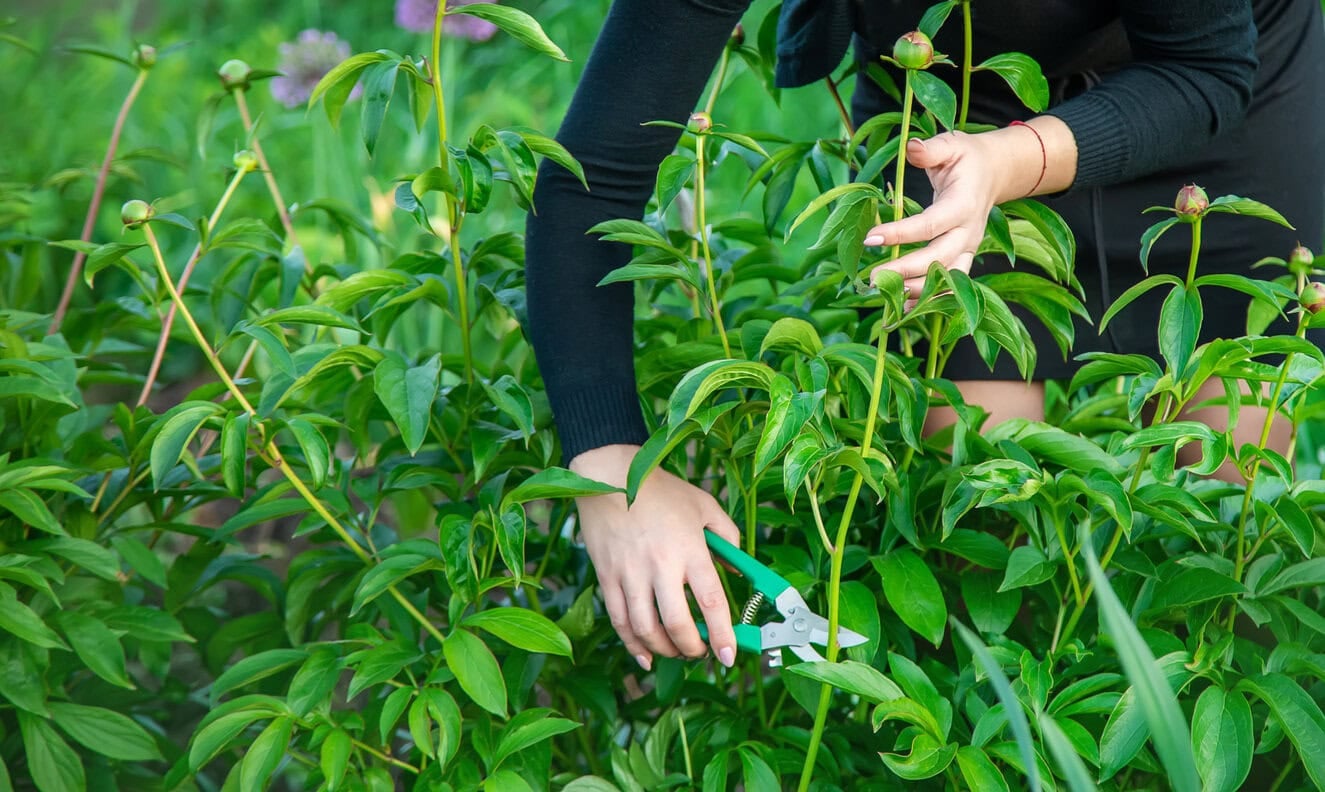
A peony without support is like a celebrity without an agent, a total catastrophe. Come spring, they crave attention, nutrients, and a bit of firm discipline. Feed them, prop them up, and hope they forgive your intrusion as they chase their moment of glory.

Here are the eight tasks I do on my peonies each spring because I’ve noticed they make a huge difference.

Don’t Let Them Flop

Follow in my footsteps because even the most regal peony possesses a shocking capacity for public humiliation. And if you’re still figuring out where peonies are happiest, we wrote a guide on finding the best spot for strong growth and better blooms.

Quick note: these spring tasks are best tackled once your peonies start emerging and the soil is workable. If your season runs later, just wait until your plants are actively growing before you get started.

1. The Spring Cleanup
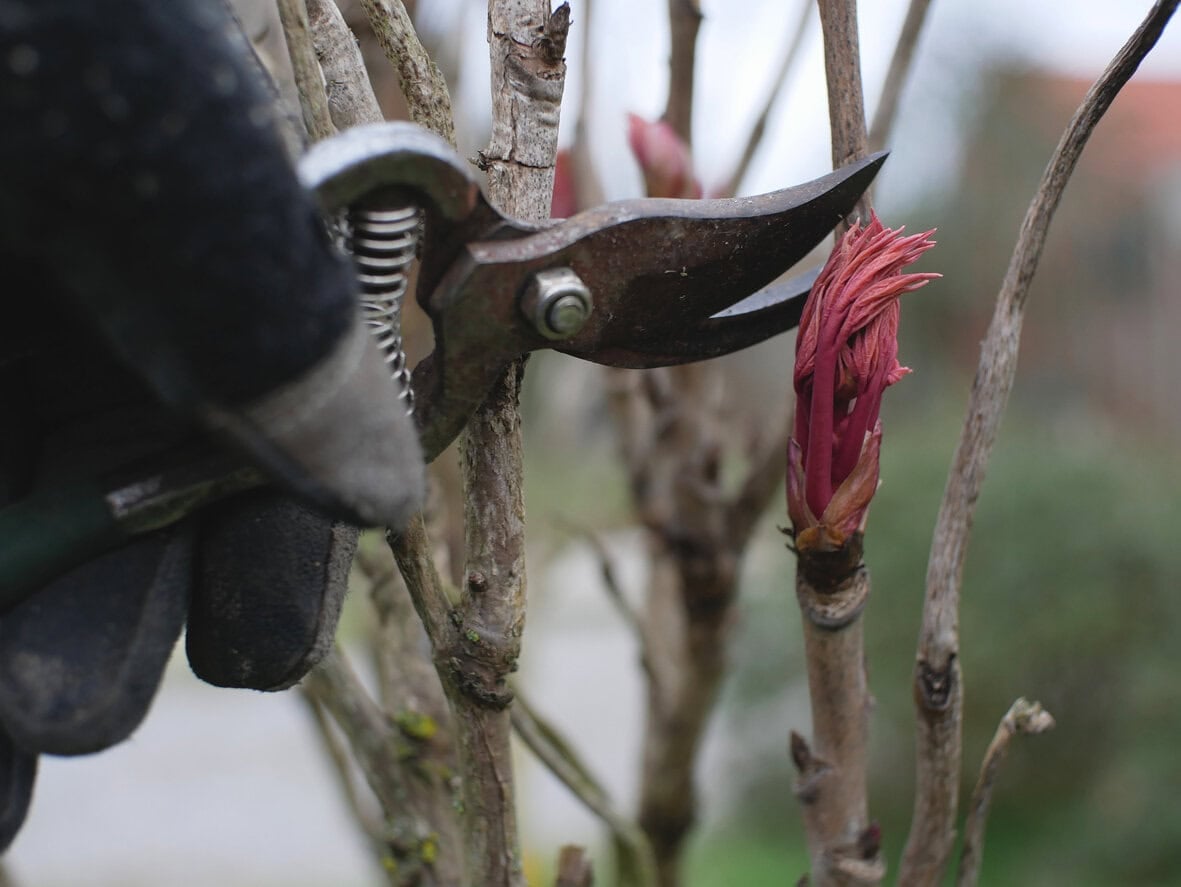
pruning peony tree springpruning peony tree spring

Leaving those dead stalks in place is just asking for fungal trouble, and not the fun kind.

I cut back the dead growth on herbaceous peonies once spring gets going, especially if I didn’t get to it in fall. There’s no use babying the plants, just clear the old mess out of there. 

Keep the crown area clear so the air moves around the plant. Peonies need to breathe, not sit in a pile of last year’s mistakes.

Quick tip: If you live somewhere damp or you spotted disease last year, toss the debris in the bin. Avoid composting it. No need to risk those problems showing up again.

If you’ve ever wondered whether peonies are better cut back in fall or left standing through winter, I wrote an article about that too.

2. Get the Support In
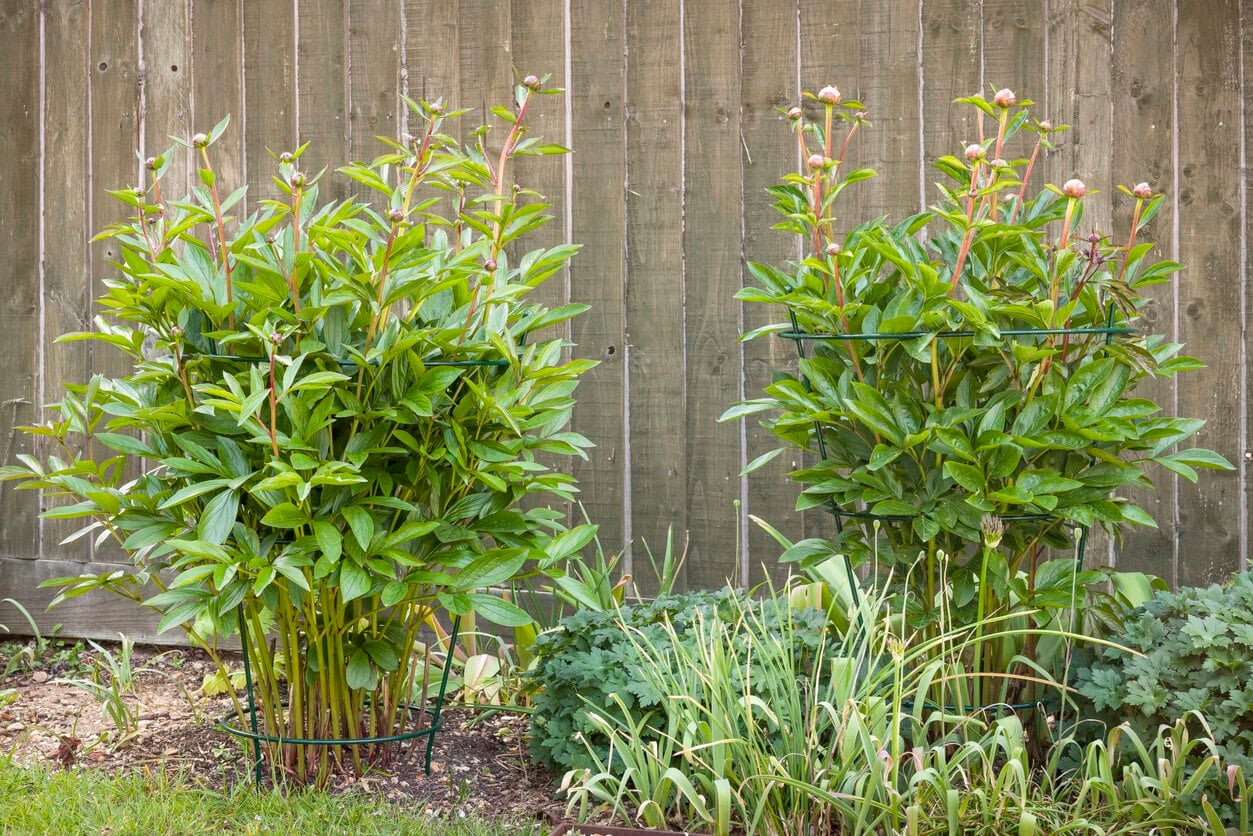
Peony plant support frame or cagePeony plant support frame or cage

Peony stems are not nearly as sturdy as they look. If you wait too long to add support, you will spend your morning wrestling a leafy octopus and trying not to snap off buds in the process. 

I put the hoops in before the shoots hit about six inches tall.

If you live in the Midwest, where the spring storms can turn everything to mush, buy the heavy-duty steel stuff that can handle the weight. 

Quick tip: I would not trust flimsy bamboo stakes for heavy peonies. They will fail, your peonies will hit the mud, and you will just look foolish.

3. Food for the Hungry
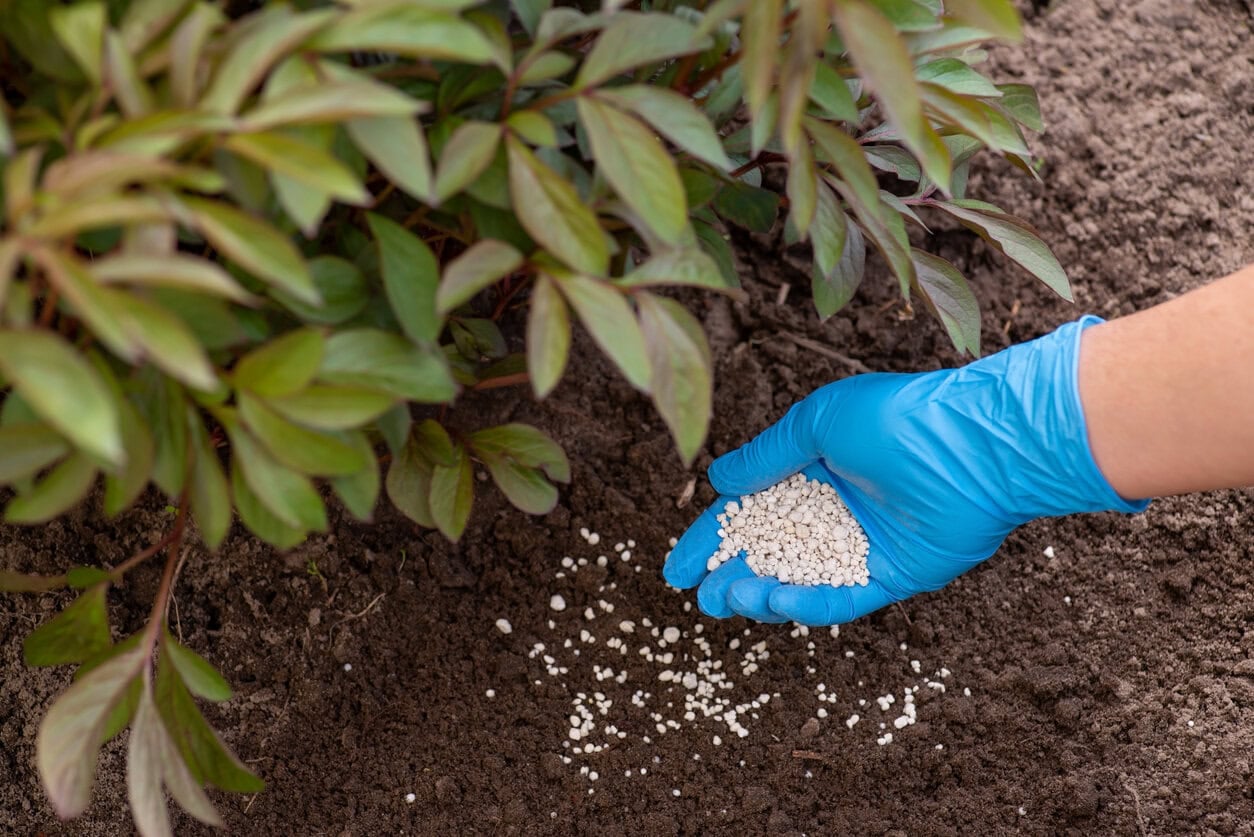
fertilizing peony springfertilizing peony spring

These things want real food but don’t overdo the fertilizer! I scratch a little fertilizer into the dirt around the drip line, not the center. You can say goodb-eye to the season if you burn their ‘eyes’.

For peonies, a light hand usually works better than overdoing it, and good soil does a lot of the heavy lifting. The goal is to feed the plant without smothering it in fertilizer.

Quick tip: I avoid anything too heavy on nitrogen because that just grows a big, boring bush.

If you want more detail on what to feed them and when, we also wrote a guide on fertilizing peonies without overdoing it.

4. Let the Ants Be
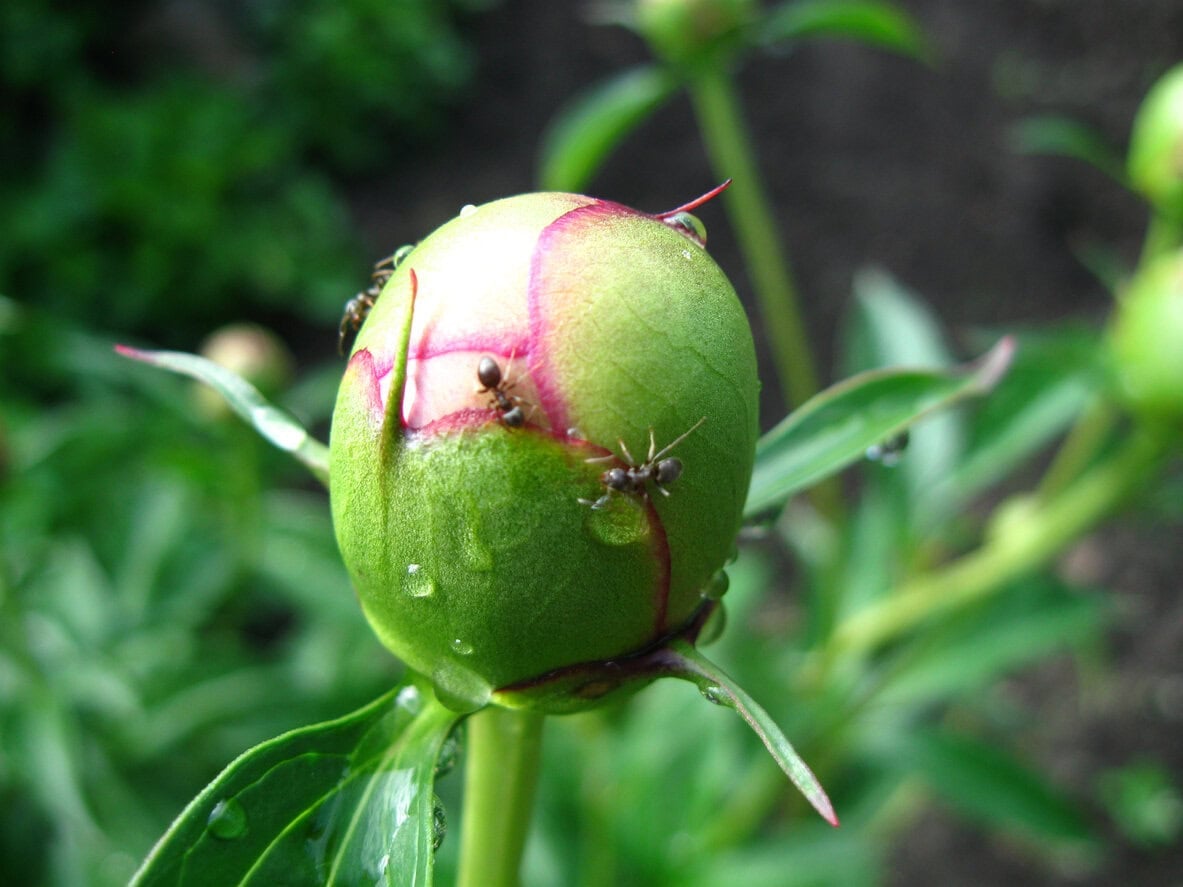
ants peonyants peony

Everyone freaks out when they see ants on the buds. Get over it. The ants are there for the sugary sap. They are not eating your flowers. They are mostly harmless, and your peonies do not need spraying over a few ants.

It is a trade of sorts. They get a snack and your peonies keep doing what peonies do. There is no need to spray just because ants showed up, and the buds do not need them to open.

Let them patrol the buds in peace. They are mostly just there for the sugar anyway.

5. Water the Roots
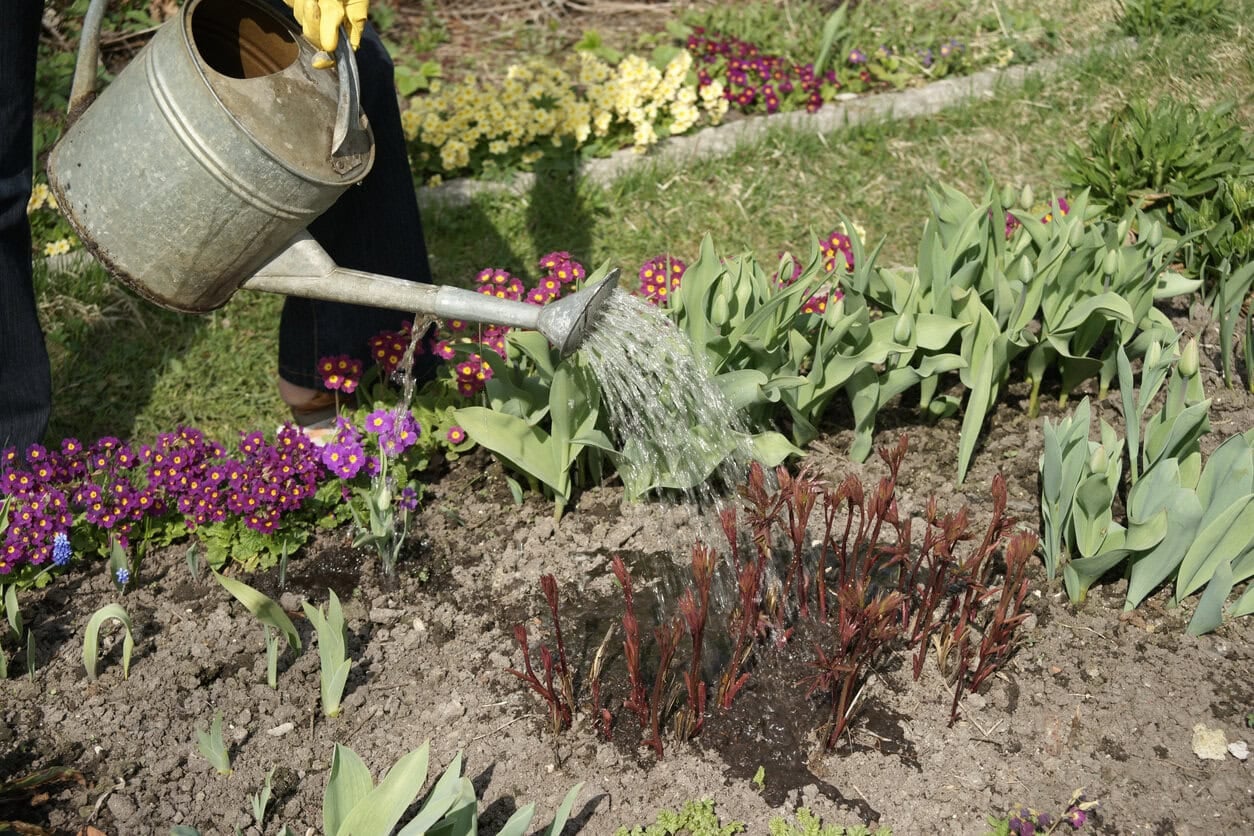
Watering peony springWatering peony spring

Spring is rarely as rainy as you think. If the soil turns hard and bone-dry, your peonies are going to feel it fast.

Always stick your trusted finger in the dirt, and if it’s cracker dry a few inches down, pull out the hose. Then run to wash the dirt out from under your nail because, honestly, yuck.

And don’t just sprinkle the surface. That barely helps. You want to soak the soil deeply so the roots get the water where they actually need it.

Quick tip: If you garden out West, you really have to watch them once the heat kicks in. A thirsty peony is a puny peony.

6. Do Not Bury the Crown
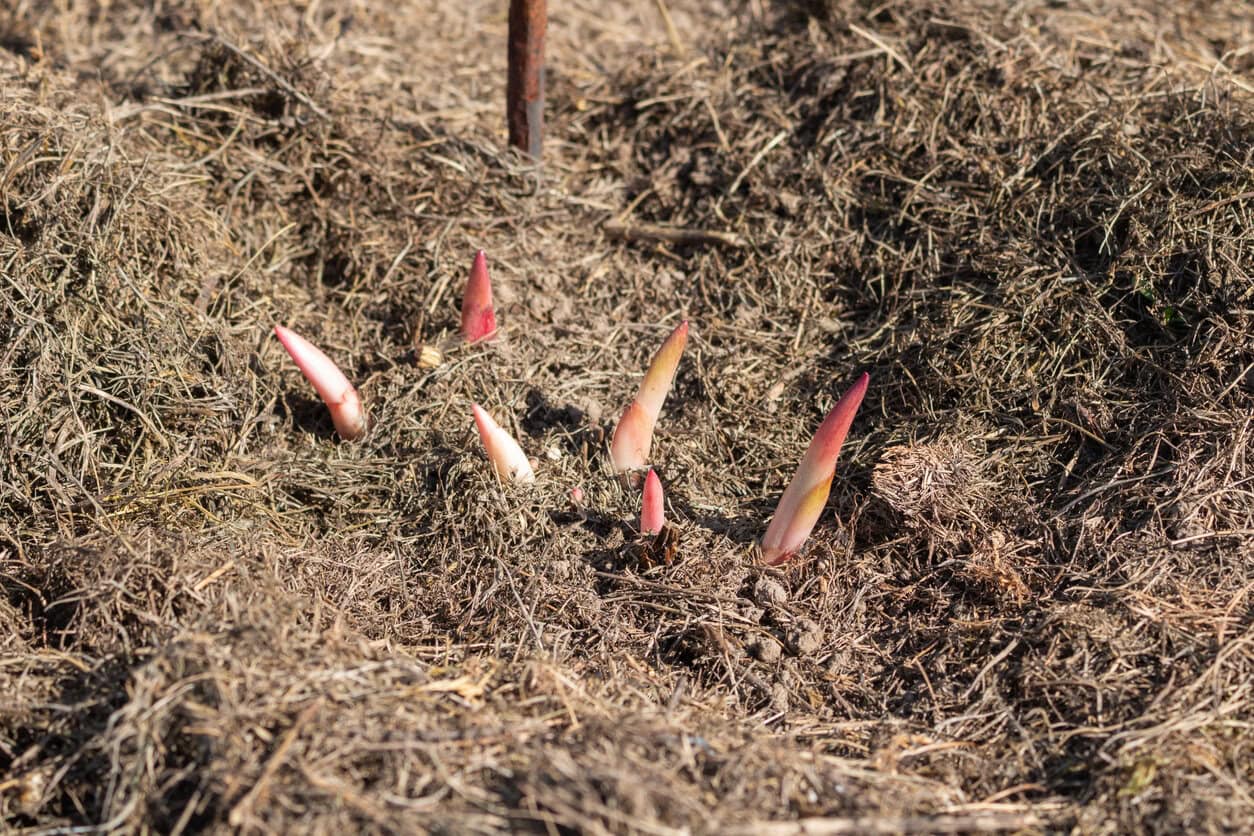
Young peony leaves sproutsYoung peony leaves sprouts

I see neighbors bury their peonies in six inches of mulch like they’re covering up a crime scene. A light layer is plenty, but keep it well clear of the crown.

Keep it simple. Keep the area around the crown clear, keep the mulch light, and let the plant breathe.

Pile it too high, and you start asking for trouble. Herbaceous peony eyes should not end up buried too deeply, because peonies often bloom poorly when planted deeper than about 1 to 2 inches below the soil surface.

Heavy mulch can also keep the plant too damp around the base. Then you sit there waiting for flowers that never show because you buried the hardware.

And if you’re thinking about what to plant around your peonies, I wrote an article about the best companion plants and what to avoid crowding them with.

7. Watch for the Rot
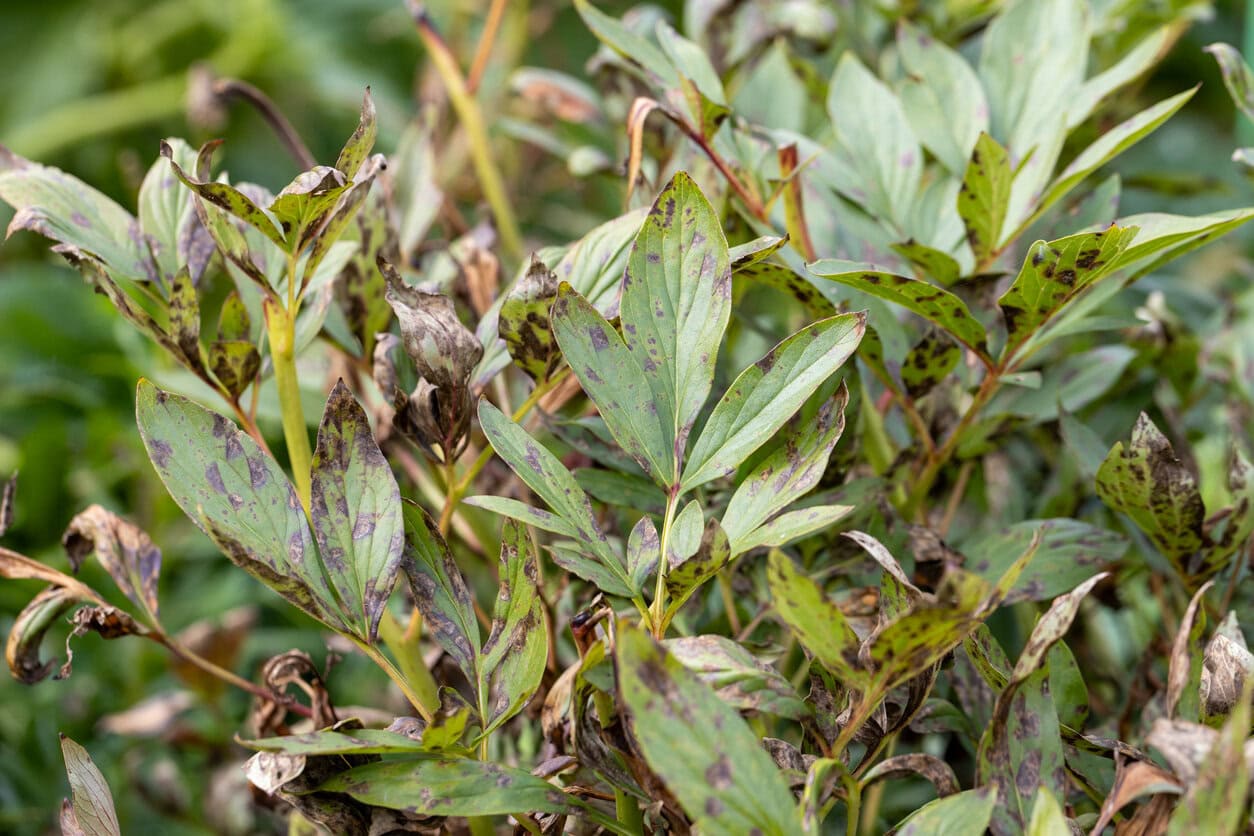
Brown rot peoniesBrown rot peonies

Gray mold is a plague of damp garden corners. If I spot a stem looking wilted, blackened, or suspiciously mushy, I cut it out with sharp shears before it spreads any farther. Why give it the run of the place?

If you garden in a wet spot, stay on top of cleanup and airflow early.

Quick tip: If the problem keeps returning, a labeled fungicide can help, but sanitation comes first. Keep your tools clean. A quick wipe with alcohol is just basic hygiene. At least my favorite uncle says so.

8. Thin the Buds

pruning peonypruning peony

You want a flower the size of a dinner plate? Cut the side buds. I know, it feels wrong.

You think more buds equal more flowers. Technically they do, but it also means smaller blooms instead of one big showstopper.

Later in spring, once the buds are forming, I pull the side ones off so the main bud gets more of the plant’s energy. It’s a brutal trade, but the math usually holds up. Sacrificing those weak side buds gives you one larger, more dramatic flower.

Making Every Peony Count
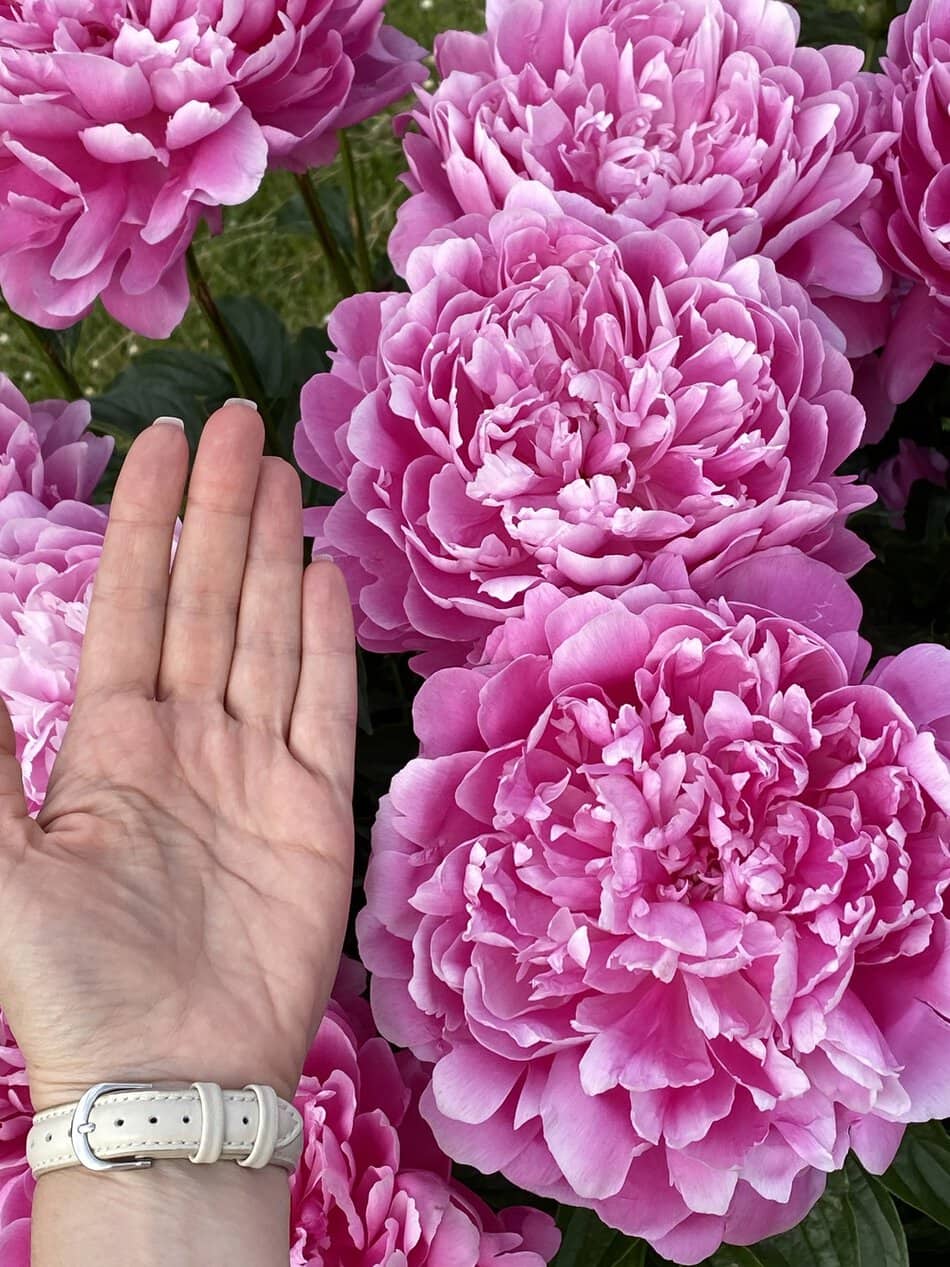
Pink peonies, hand showcasing flower size against green foliagePink peonies, hand showcasing flower size against green foliage

And if your peonies are not blooming well no matter what you do, make sure they are getting enough sun. More shade usually means fewer flowers.

Your garden deserves greatness, and frankly, so do you. Just avoid the urge to baby your peonies too much; they prefer a little discipline over your emotional attachment. Treat them like stars, then enjoy the fruits, or rather, the flowers of your very hard work.

And once the blooms are over, I also wrote an article about whether to cut peonies back or leave them alone after flowering.

Dragana by TinyGardenHabitDragana by TinyGardenHabit

Dragana Cergna

Hey there! I’m Dragana, an ecologist with a serious soft spot for soil and the magic that sprouts from it. My Adriatic garden is a bit of a wild bunch: aromatic herbs and roses doing their fragrant thing, juicy fruits and stubborn olive trees with a Mediterranean attitude. I’m here to unearth gardening wonders; are you ready to dig in with me?

Related Articles

Leave a Reply

Your email address will not be published. Required fields are marked *

Peony Care in Spring: 8 Jobs for Healthier Plants and Bigger Blooms

A peony without support is like a celebrity without an agent, a total catastrophe. Come spring, they crave attention, nutrients, and a bit of firm discipline. Feed them, prop them up, and hope they forgive your intrusion as they chase their moment of glory.

Here are the eight tasks I do on my peonies each spring because I’ve noticed they make a huge difference.

Don’t Let Them Flop

Follow in my footsteps because even the most regal peony possesses a shocking capacity for public humiliation. And if you’re still figuring out where peonies are happiest, we wrote a guide on finding the best spot for strong growth and better blooms.

Quick note: these spring tasks are best tackled once your peonies start emerging and the soil is workable. If your season runs later, just wait until your plants are actively growing before you get started.

1. The Spring Cleanup

pruning peony tree springpruning peony tree spring

Leaving those dead stalks in place is just asking for fungal trouble, and not the fun kind.

I cut back the dead growth on herbaceous peonies once spring gets going, especially if I didn’t get to it in fall. There’s no use babying the plants, just clear the old mess out of there. 

Keep the crown area clear so the air moves around the plant. Peonies need to breathe, not sit in a pile of last year’s mistakes.

Quick tip: If you live somewhere damp or you spotted disease last year, toss the debris in the bin. Avoid composting it. No need to risk those problems showing up again.

If you’ve ever wondered whether peonies are better cut back in fall or left standing through winter, I wrote an article about that too.

2. Get the Support In

Peony plant support frame or cagePeony plant support frame or cage

Peony stems are not nearly as sturdy as they look. If you wait too long to add support, you will spend your morning wrestling a leafy octopus and trying not to snap off buds in the process. 

I put the hoops in before the shoots hit about six inches tall.

If you live in the Midwest, where the spring storms can turn everything to mush, buy the heavy-duty steel stuff that can handle the weight. 

Quick tip: I would not trust flimsy bamboo stakes for heavy peonies. They will fail, your peonies will hit the mud, and you will just look foolish.

3. Food for the Hungry

fertilizing peony springfertilizing peony spring

These things want real food but don’t overdo the fertilizer! I scratch a little fertilizer into the dirt around the drip line, not the center. You can say goodb-eye to the season if you burn their ‘eyes’.

For peonies, a light hand usually works better than overdoing it, and good soil does a lot of the heavy lifting. The goal is to feed the plant without smothering it in fertilizer.

Quick tip: I avoid anything too heavy on nitrogen because that just grows a big, boring bush.

If you want more detail on what to feed them and when, we also wrote a guide on fertilizing peonies without overdoing it.

4. Let the Ants Be

ants peonyants peony

Everyone freaks out when they see ants on the buds. Get over it. The ants are there for the sugary sap. They are not eating your flowers. They are mostly harmless, and your peonies do not need spraying over a few ants.

It is a trade of sorts. They get a snack and your peonies keep doing what peonies do. There is no need to spray just because ants showed up, and the buds do not need them to open.

Let them patrol the buds in peace. They are mostly just there for the sugar anyway.

5. Water the Roots

Watering peony springWatering peony spring

Spring is rarely as rainy as you think. If the soil turns hard and bone-dry, your peonies are going to feel it fast.

Always stick your trusted finger in the dirt, and if it’s cracker dry a few inches down, pull out the hose. Then run to wash the dirt out from under your nail because, honestly, yuck.

And don’t just sprinkle the surface. That barely helps. You want to soak the soil deeply so the roots get the water where they actually need it.

Quick tip: If you garden out West, you really have to watch them once the heat kicks in. A thirsty peony is a puny peony.

6. Do Not Bury the Crown

Young peony leaves sproutsYoung peony leaves sprouts

I see neighbors bury their peonies in six inches of mulch like they’re covering up a crime scene. A light layer is plenty, but keep it well clear of the crown.

Keep it simple. Keep the area around the crown clear, keep the mulch light, and let the plant breathe.

Pile it too high, and you start asking for trouble. Herbaceous peony eyes should not end up buried too deeply, because peonies often bloom poorly when planted deeper than about 1 to 2 inches below the soil surface.

Heavy mulch can also keep the plant too damp around the base. Then you sit there waiting for flowers that never show because you buried the hardware.

And if you’re thinking about what to plant around your peonies, I wrote an article about the best companion plants and what to avoid crowding them with.

7. Watch for the Rot

Brown rot peoniesBrown rot peonies

Gray mold is a plague of damp garden corners. If I spot a stem looking wilted, blackened, or suspiciously mushy, I cut it out with sharp shears before it spreads any farther. Why give it the run of the place?

If you garden in a wet spot, stay on top of cleanup and airflow early.

Quick tip: If the problem keeps returning, a labeled fungicide can help, but sanitation comes first. Keep your tools clean. A quick wipe with alcohol is just basic hygiene. At least my favorite uncle says so.

8. Thin the Buds

pruning peonypruning peony

You want a flower the size of a dinner plate? Cut the side buds. I know, it feels wrong.

You think more buds equal more flowers. Technically they do, but it also means smaller blooms instead of one big showstopper.

Later in spring, once the buds are forming, I pull the side ones off so the main bud gets more of the plant’s energy. It’s a brutal trade, but the math usually holds up. Sacrificing those weak side buds gives you one larger, more dramatic flower.

Making Every Peony Count

Pink peonies, hand showcasing flower size against green foliagePink peonies, hand showcasing flower size against green foliage

And if your peonies are not blooming well no matter what you do, make sure they are getting enough sun. More shade usually means fewer flowers.

Your garden deserves greatness, and frankly, so do you. Just avoid the urge to baby your peonies too much; they prefer a little discipline over your emotional attachment. Treat them like stars, then enjoy the fruits, or rather, the flowers of your very hard work.

And once the blooms are over, I also wrote an article about whether to cut peonies back or leave them alone after flowering.

Dragana by TinyGardenHabitDragana by TinyGardenHabit

Dragana Cergna

Hey there! I’m Dragana, an ecologist with a serious soft spot for soil and the magic that sprouts from it. My Adriatic garden is a bit of a wild bunch: aromatic herbs and roses doing their fragrant thing, juicy fruits and stubborn olive trees with a Mediterranean attitude. I’m here to unearth gardening wonders; are you ready to dig in with me?

Related Articles

Leave a Reply

Your email address will not be published. Required fields are marked *

Back to top button

Adblock Detected

Disable ADBLOCK to view this content!