Hydrangea Care in May: 7 Essential Tasks for Healthy Growth and Abundant Blooms
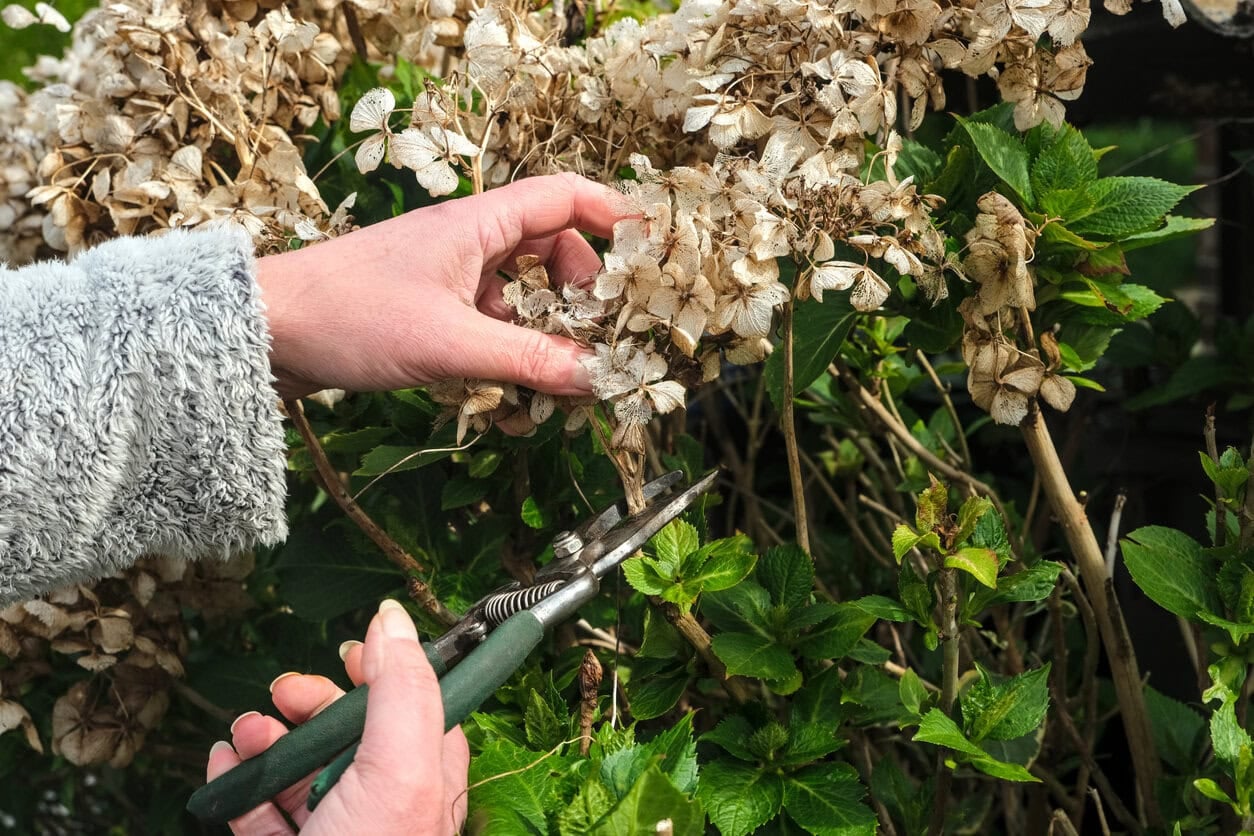
I see hydrangeas in so many gardens lately. Did they become a new status symbol while I was outside… taking care of my own hydrangeas? Everyone seems to have one now, but not everyone knows what to do with it once May shows up with warmer days, fast new growth, and the first signs of future blooms.
So, do YOU know how to survive May without accidentally stressing your plant, losing flowers, or bruising your gardening ego? Let me help you.
Why’s May So Special?
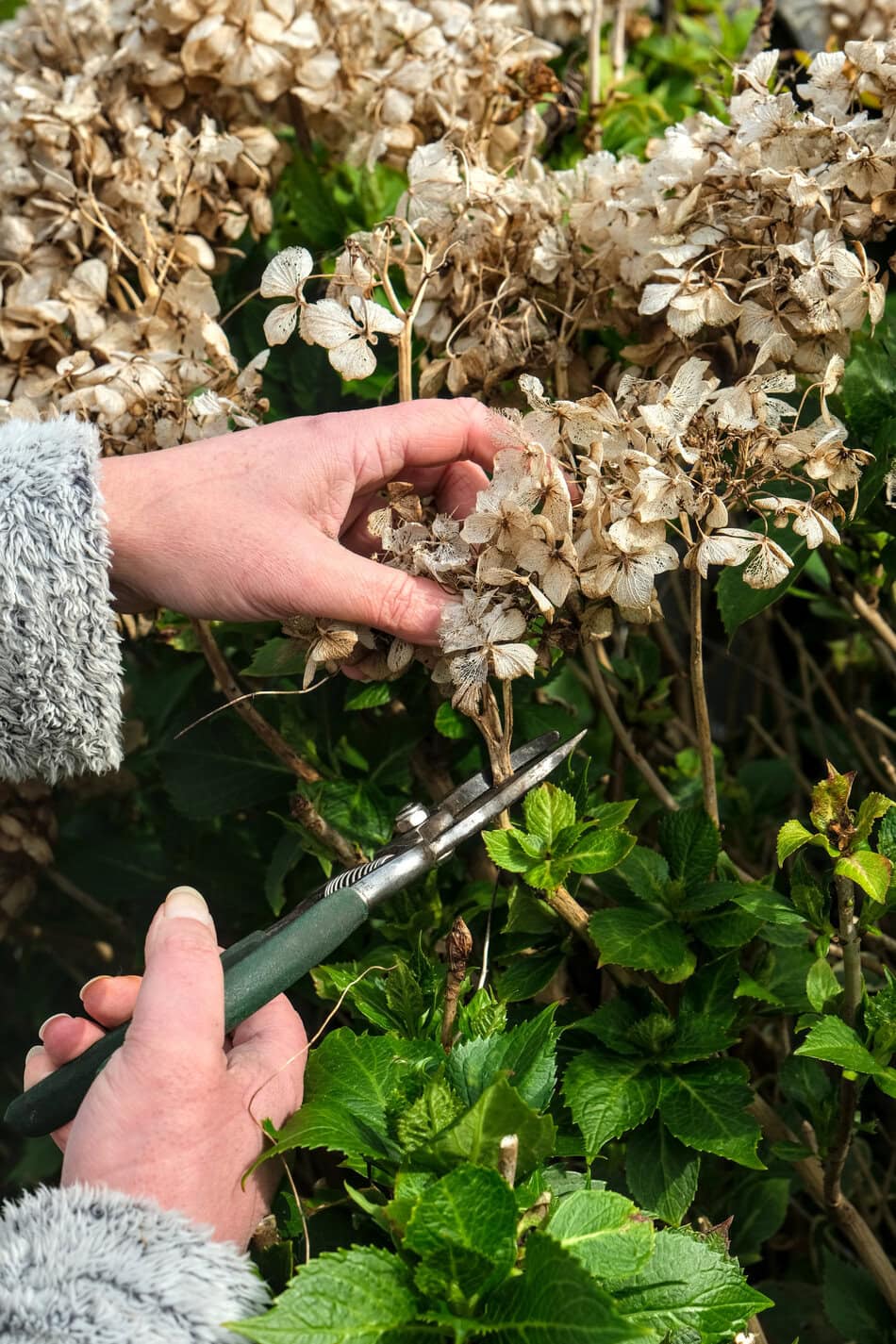
May is when your hydrangeas stop looking like a pile of hopeful leaves and start getting serious about growth, buds, and future blooms. I like to check mine now because it’s much easier to fix small problems in May than to explain sad flowers in July.
This is also the month to deal with dead stems, crowded growth, and floppy future trouble while the plant is still manageable. Ignore it now, and June has a charming way of turning tiny mistakes into very dramatic shrub behavior.
Quick reminder: Of course, “May” looks different depending on your climate, so use your plant’s growth as the real calendar: new leaves, visible buds, workable soil, and no obvious frost damage.
If you’re still getting your spring routine together, we also wrote a guide on common hydrangea care mistakes to avoid before they turn into bloom drama.
1. Final Hardwood Clearance
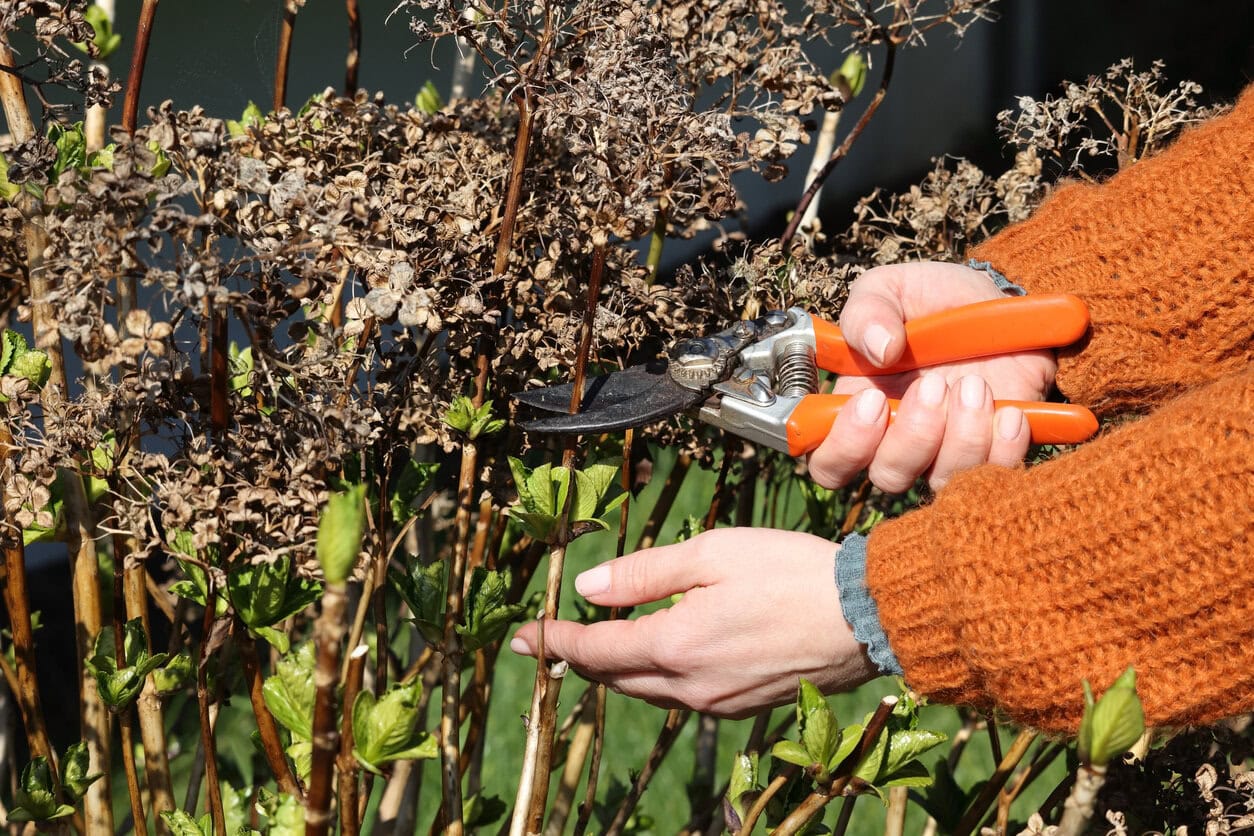
By mid-May, the distinction between living tissue and winter-kill is usually much clearer.
Stop staring at brittle sticks hoping for a miracle. If a cane has no green buds, no leaves, and no sign of life when you gently scratch the bark, it probably isn’t coming back! Cut those dead stems back cleanly, right to the base.
Pruning earlier was risky guesswork that could have cost you flowers, especially on hydrangeas that bloom on old wood. Pruning now helps your plant stop wasting space on dead weight and focus its energy on healthy growth. Keep it clean.
If pruning still makes you nervous, we explain when and how to prune hydrangeas without accidentally sacrificing your flowers.
2. Strategic Spring Feeding
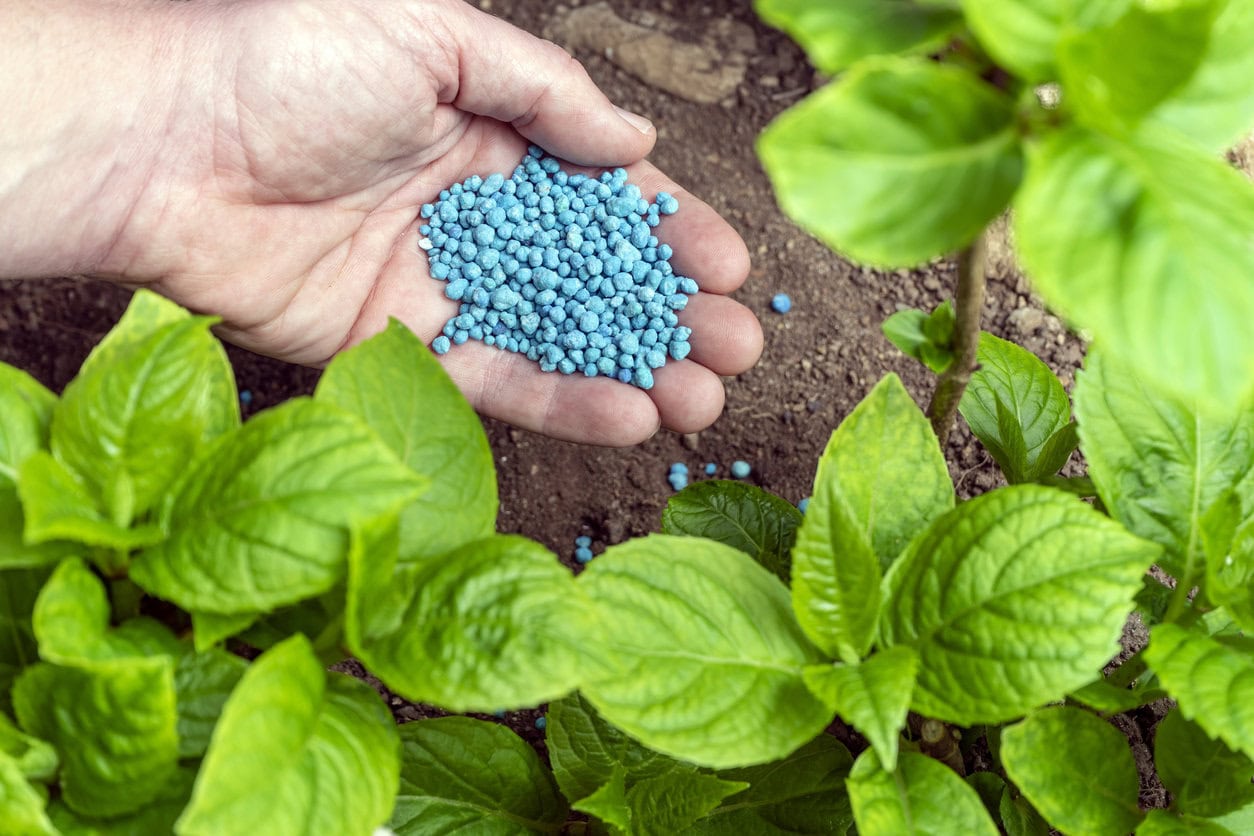
May marks the beginning of the garden hunger games. If you want strong growth and oversized blooms worth bragging about, you must fund the growth spurt immediately.
Distribute a balanced, slow-release fertilizer around the drip line if your plant looks like it needs a boost.
Your hydrangea is currently building a massive leafy solar panel. With the right support, it has a much better chance of carrying the heavy floral crown it plans to wear in July.
Quick tip: Avoid going too heavy on nitrogen, too much can give you a leafy show-off with fewer flowers.
We also put together a guide on helping hydrangeas bloom bigger and brighter if you want the full bragging-rights routine.
3. Hydrangea Scale Scouting
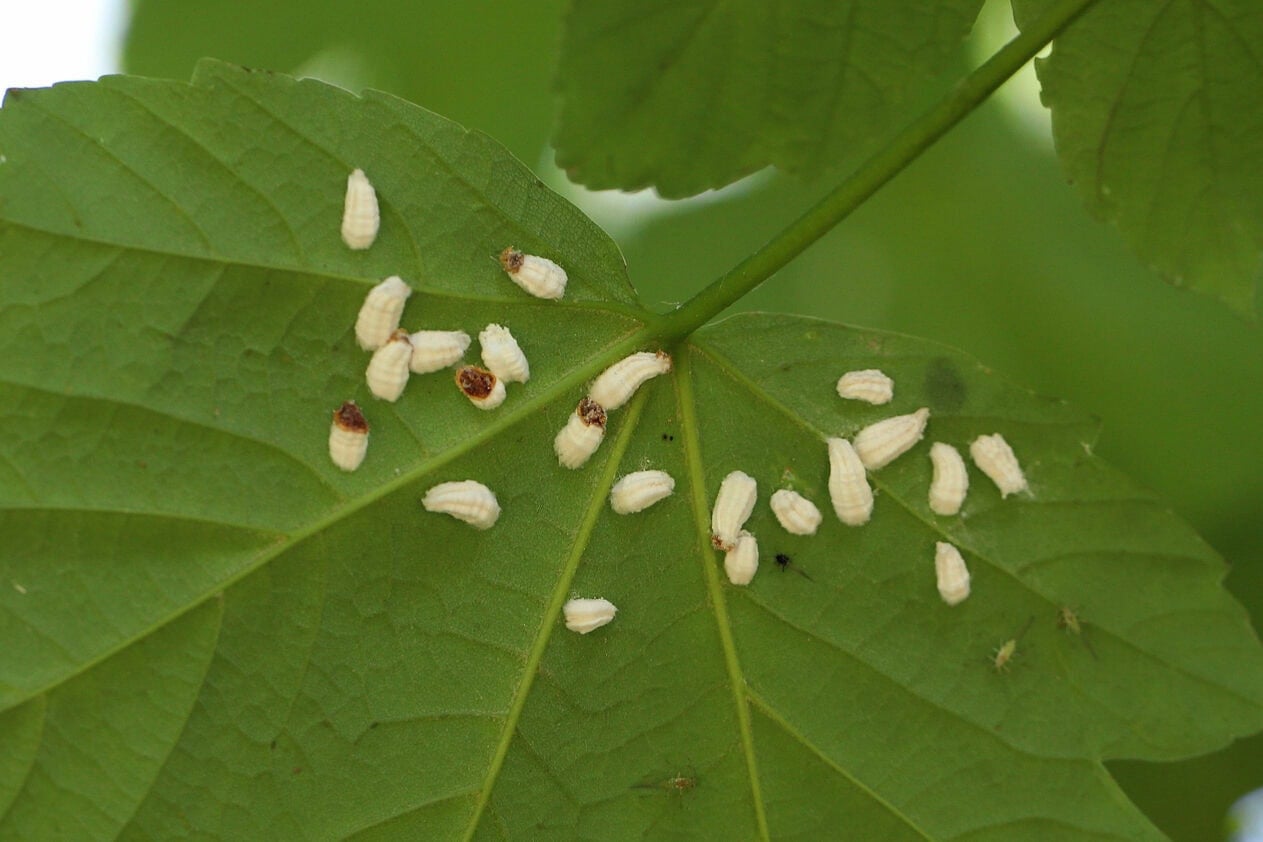
Right now, a tiny army of white, waxy parasites is eyeing your prize shrub and scheduling a family reunion.
Inspect the undersides of those lush leaves and along the stems for oval, white egg masses before the family fully RSVPs. May is a smart time to start scouting, even if the most obvious activity often shows up closer to early summer.
Quick tip: Catch scale early while it’s still manageable, or you may be dealing with sticky honeydew, sooty mold, and a very unhappy plant just as it tries to bloom.
4. Selective “Softwood” Thinning

A crowded hydrangea is a ticking fungal bomb waiting to detonate on a humid June afternoon.
Let’s say your plant’s center looks like a bird’s nest. Your task now is to carefully remove dead, damaged, crossing, or very weak stems doing absolutely nothing for the aesthetic.
Increasing internal airflow in May is your primary defense against powdery mildew and leaf spot. Thinning with restraint helps your shrub breathe before the stifling summer air makes everything more dramatic.
Quick tip: Just keep the thinning light, especially if you’re not sure what type of hydrangea you have, because some stems may be carrying this year’s flowers.
5. Wilt Prevention Plan
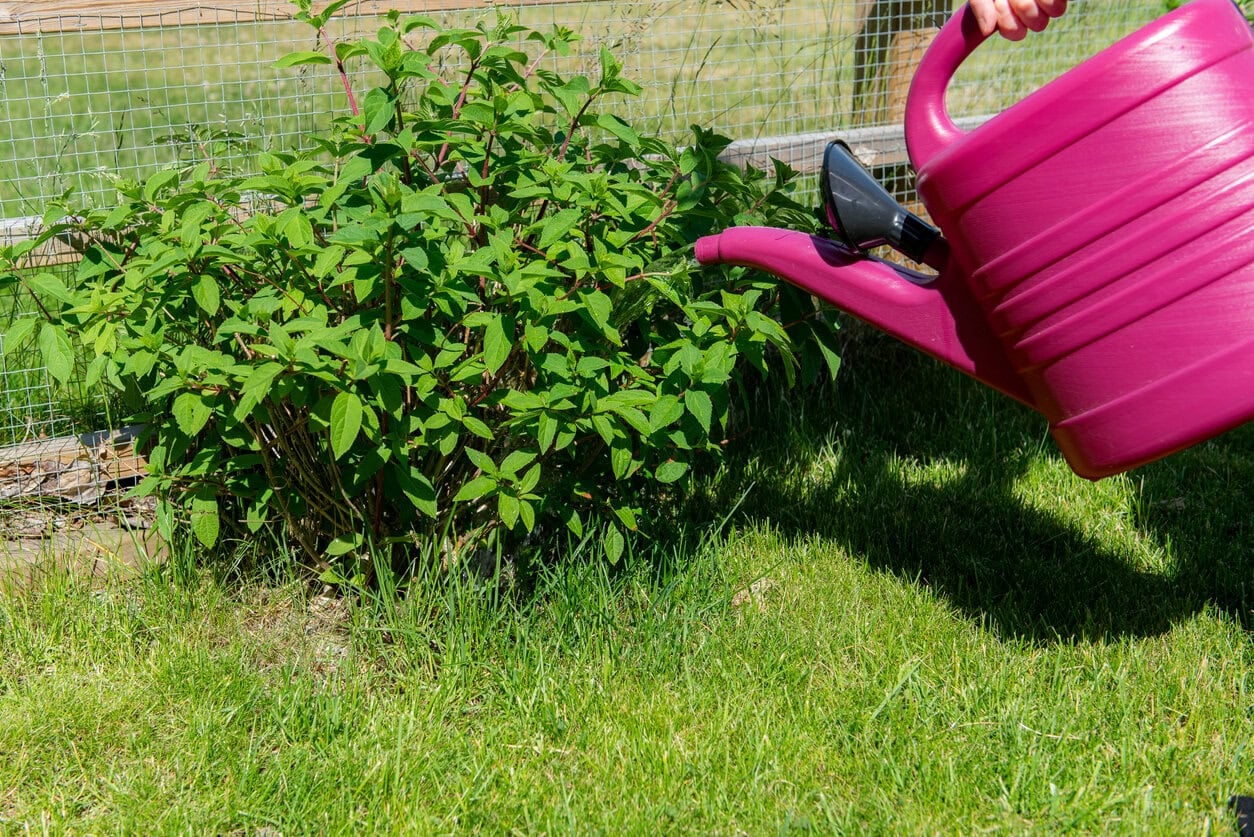
Come May, the sun finally starts to bite. Your hydrangea officially begins its seasonal tradition of demanding a drink every five minutes.
I suggest deep-watering the base until the soil is moist at least six inches down to establish a legitimate reservoir.
Creating this moisture safety net before the first heat wave helps prevent that embarrassing afternoon wilt-and-recover cycle. Want a resilient garden? Then don’t be too stingy with the hose, but don’t turn the roots into soup either.
6. pH Stabilization (Not Transformation)
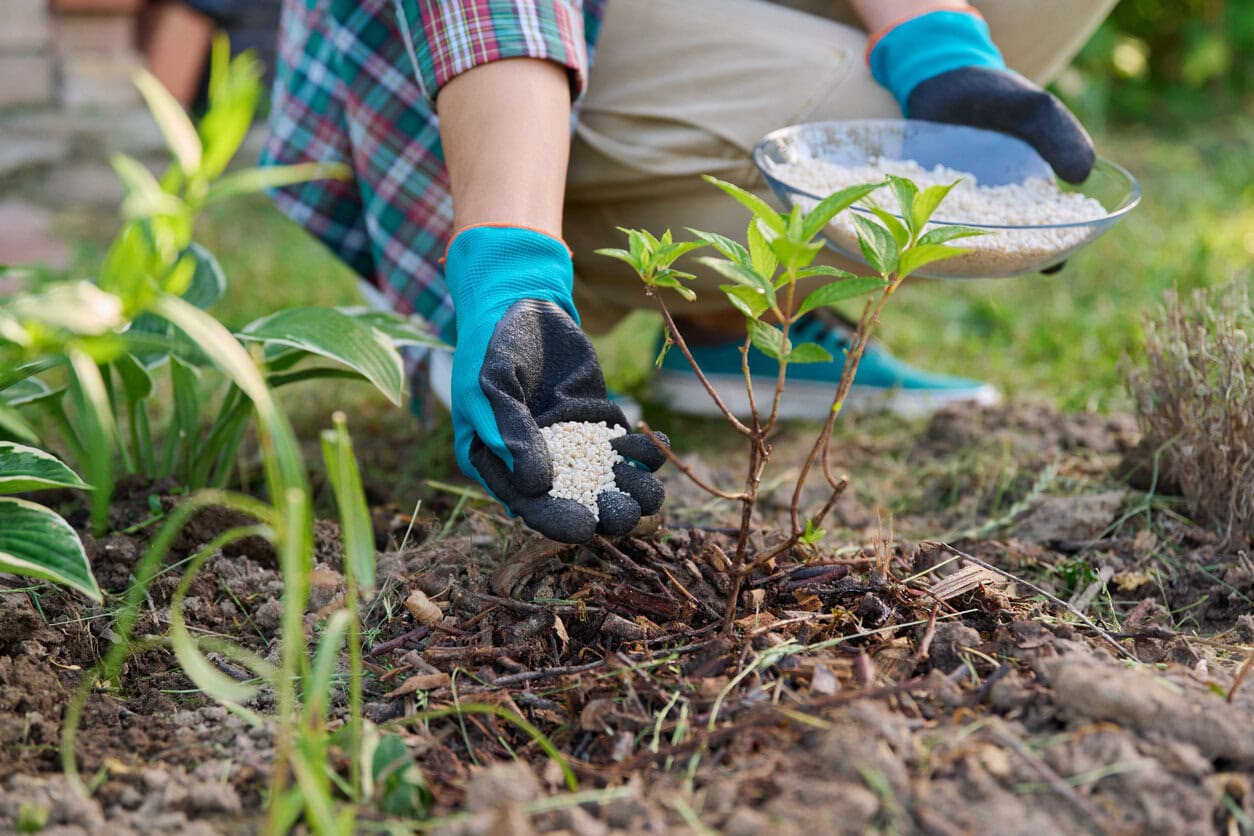
If you’re hoping for a total color flip now, you’re about three months too late. You can still prevent a muddy “meh” hue, though.
Apply a secondary, diluted dose of aluminum sulfate or garden lime to maintain the chemistry you’ve already fought for, but test your soil first. If the numbers don’t show you need it, skip it.
Why the caution? Spring rainfall and regular watering can gradually shift soil chemistry, and a careful May top-off can help keep things stable as the sepals expand. Consider this damage control so your chosen color doesn’t fade into mediocrity.
Quick note: This color trick mostly applies to bigleaf hydrangeas, not every hydrangea in the garden.
If you want the full color-control breakdown, we explain how to change hydrangea color naturally without turning your soil into a chemistry experiment.
7. Support Training
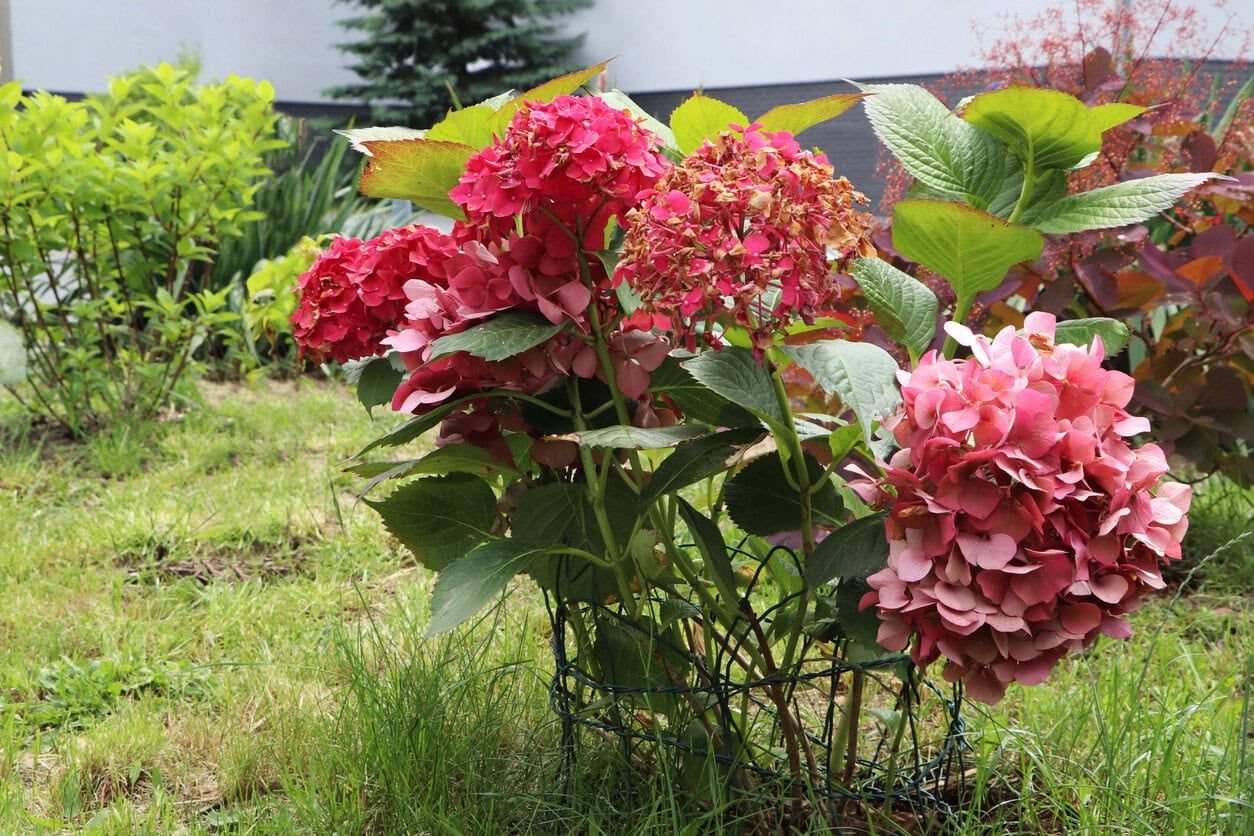
Staking a fully blooming hydrangea in July is like putting a corset on a marshmallow. It’s utterly frustrating and usually ends in a squished marshmallow.
If your hydrangea tends to flop, install cages or stakes now, while the plant is still manageable and the stems are flexible.
Isn’t it much easier to let the plant grow into a support system than to gather heavy, rain-soaked branches into one later?
Quick tip: Securing them now will prevent your expensive flowers from face-planting after the first dramatic summer downpour.
The Five-Minute Rule
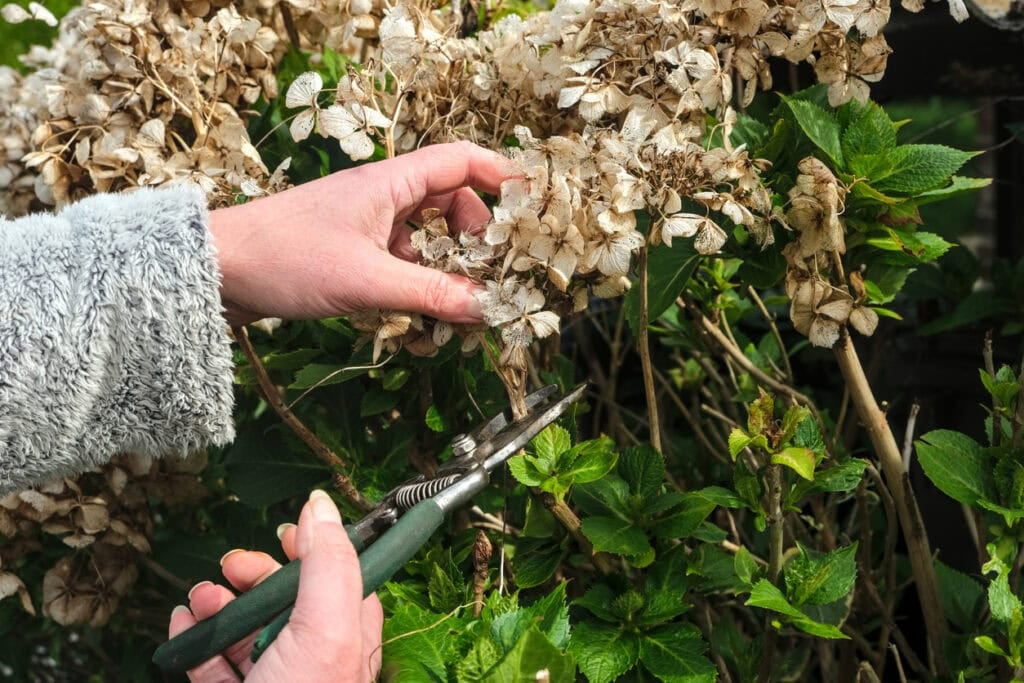
The most effective tool in your shed isn’t the $50 pruner; it’s your eyes.
Spend five minutes every morning with your coffee just looking at the base of your plants. Most June emergencies are actually visible warnings in May.
- Yellowish new leaves? Your soil pH may be too high, or your plant may be dealing with drainage, nutrient, or root stress.
- Limp leaves before noon? Your soil moisture reservoir may already be gone.
- Cuddling branches? A friction wound can become a landing strip for fungal spores. All much easier to prevent than fix later.
And if your hydrangeas keep skipping the flower show entirely, we wrote about the mistakes that keep hydrangeas from blooming and how to fix them.
Staking Your Claim to Great Hydrangeas
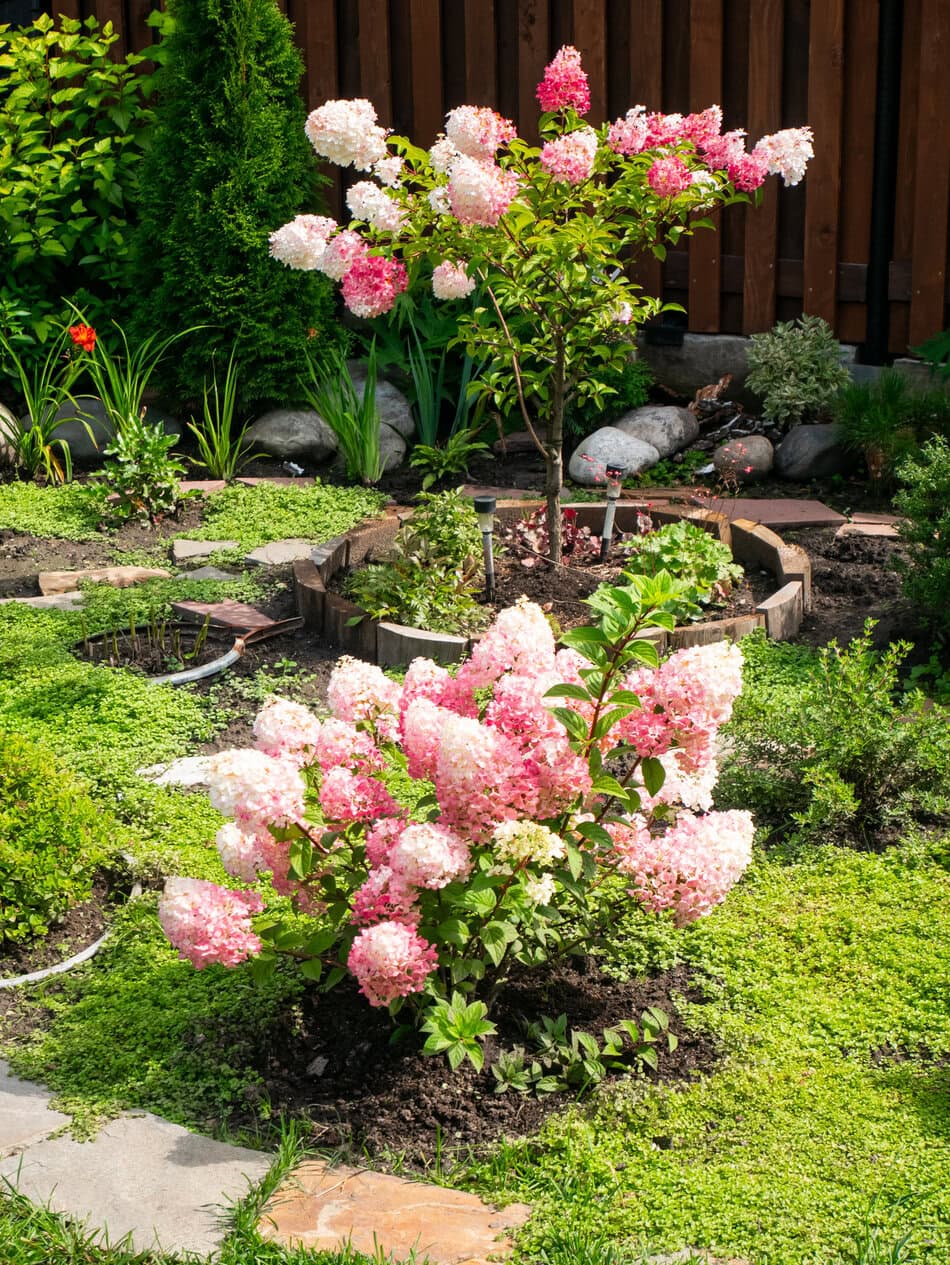
Nature is unpredictable and occasionally mean. A late frost, heavy hail, or a clumsy dog can still flatten your progress in a single afternoon. If a stem flops, take a breath. Hydrangea mastery is simply paying attention before the crisis hits. And being just a tiny bit competitive.

Hey there! I’m Dragana, an ecologist with a serious soft spot for soil and the magic that sprouts from it. My Adriatic garden is a bit of a wild bunch: aromatic herbs and roses doing their fragrant thing, juicy fruits and stubborn olive trees with a Mediterranean attitude. I’m here to unearth gardening wonders; are you ready to dig in with me?