12 Low-Mess Flowers That Keep Borders Looking Neat
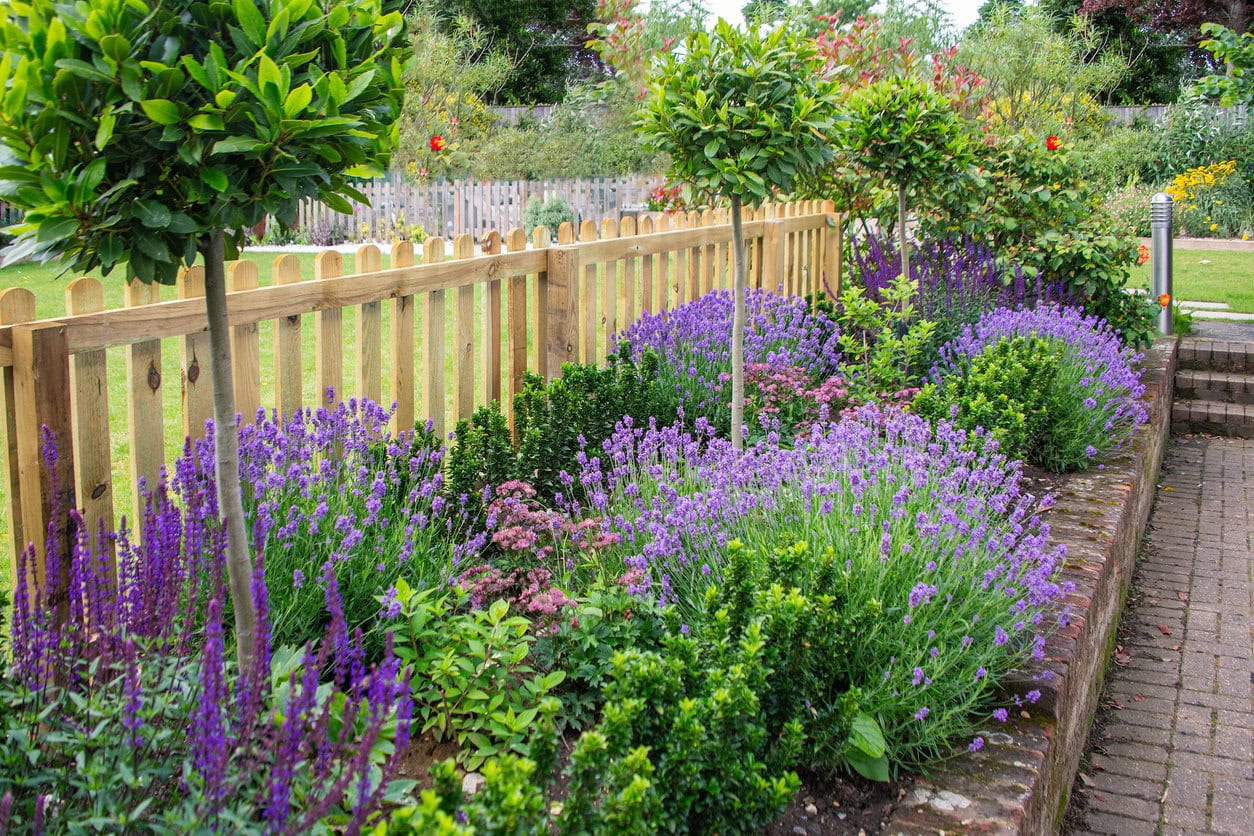
I know you’re afraid of flowers behaving like toddlers in a ball pit. They’re cute for five minutes, max. Then there’s chaos everywhere, and your border looks like it gave up. If you want a garden border that stays within the lines, you just need plants with a basic sense of decorum.
If you’re trying to build a border that actually behaves itself year-round, I put together a guide on plants for garden borders that keep their shape, color, and structure without constant work.
Mounds Of Joy, Zero Annoy
Invasive plants have boundary issues, but clumping varieties and a few shrubs possess the self-control most borders are begging for.
1. Lavender (USDA Zones 5-8)

Walking past lavender feels like a subtle flex. It’s the silver-green equivalent of a Keep Calm and Plant Lavender poster, but actually useful.
It grows in tidy mounds and holds its purple flower spikes nicely, so you’re not constantly dealing with flopping stems or a messy border. Bonus: it smells a whole lot better than whatever the neighbor is burning on that rusty grill.
Quick reminder: This one can be toxic if pets chew on it, so I wouldn’t recommend it for gardens with curious dogs or cats.
If you’re not sure when to trim it, we wrote a guide on whether you should prune lavender in spring or fall to keep it compact and full.
2. Sedum (USDA Zones 3-9)
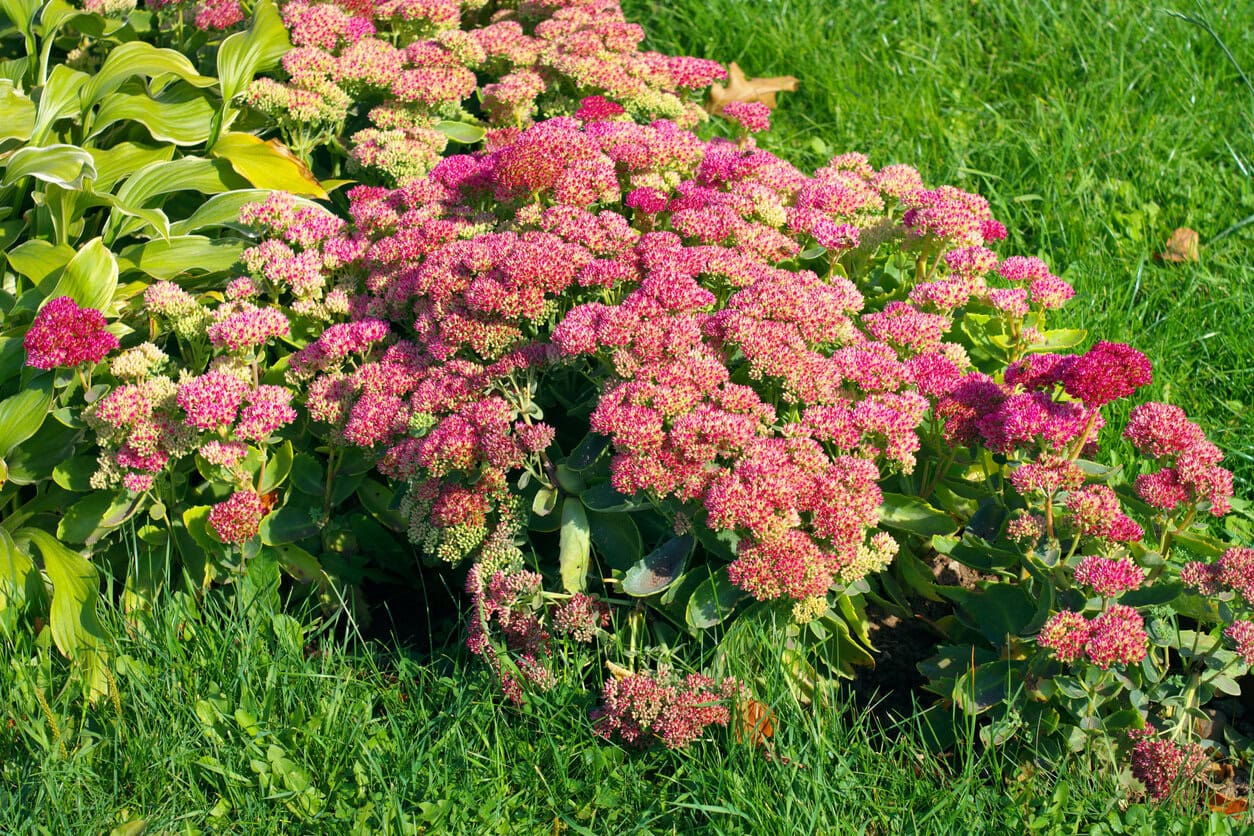
Sturdiness is the whole point here. Sedum ‘Autumn Joy’ doesn’t bother with flimsy, tissue-paper petals. It grows thick, rubbery leaves that stare back at a heatwave without blinking.
As the season shifts, the flower heads deepen to a dusty rose color, sitting there like a dignified centerpiece that refuses to wilt or cause a scene.
Quick tip: I like to leave the seed heads standing into fall because they still look good after the flowers fade and keep the border from looking bare too soon.
3. Hosta (USDA Zones 3-8)

Skip the floral drama and embrace the leaf. Hostas are the shade-dwelling heavyweights that know how to stay put.
The foliage looks like it went through an industrial-grade steam press: crisp, broad, and impossible to ignore. Sure, they may toss up a flower stalk later, but the real prize is a border that stays full, neat, and grounded for months.
Quick reminder: Hostas are toxic to pets, so keep that in mind if you have a dog or cat that likes to sample the landscaping.
If yours start looking rough mid-season, I explain how to trim back yellowing hosta leaves so the whole plant looks fresh again.
4. Heuchera (USDA Zones 3-8)
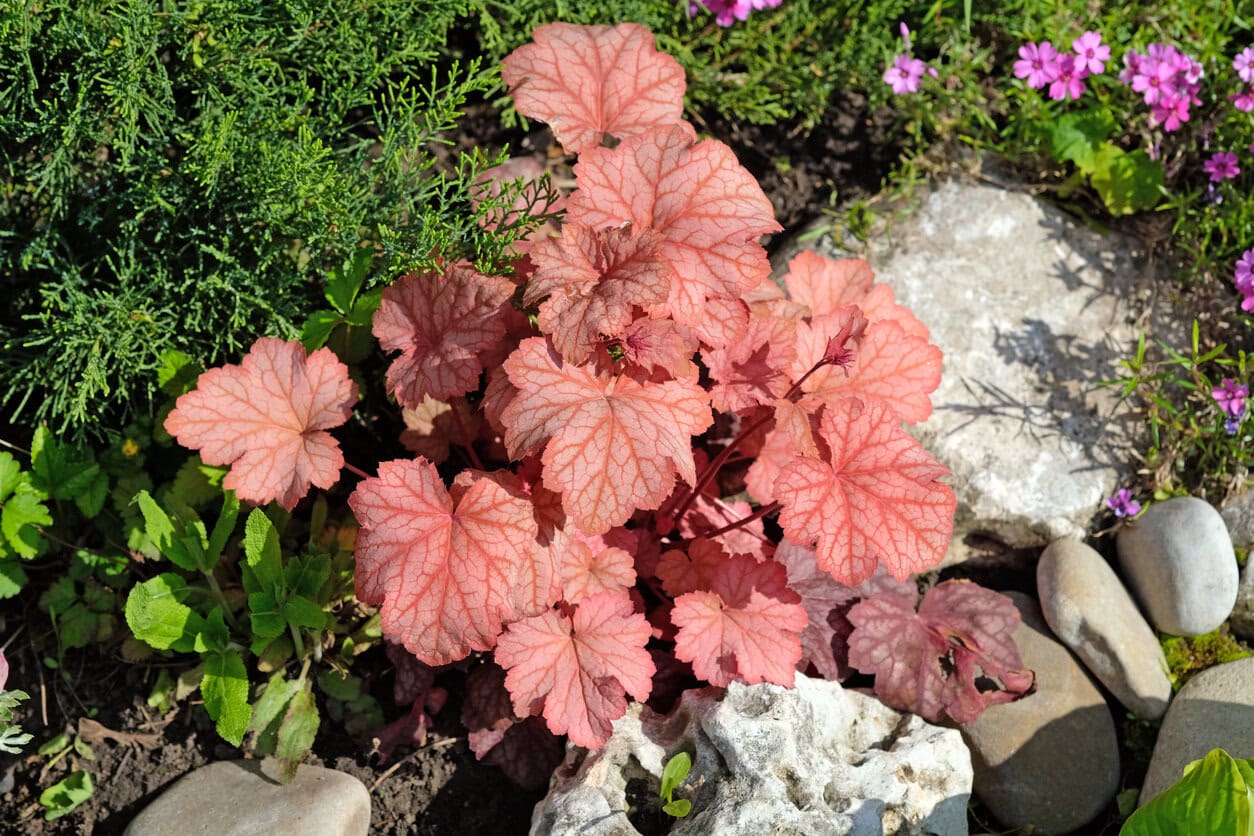
Why gamble on blossoms when you can pick leaves in shades of plum, caramel, or neon lime? Coral Bells are polite.
They grow in tidy, colorful clumps that stay right where you want them, adding constant color without turning your border into a cleanup job. It’s a solid choice for people who don’t want to spend their Saturday picking up dead petals.
Quick tip: I like to snip off any tired leaves in early spring so the fresh growth comes in looking clean and the whole clump stays neat.
5. Daylilies (USDA Zones 3-10)

I recommend planting compact, clump-forming daylilies like ‘Stella de Oro,’ ‘Happy Returns,’ or ‘Mini Stella’ if you want the look without as much spread.
These are the blue-collar flowers. They form a dense, grassy fountain that helps crowd out weeds and keeps the border looking full.
While each Hemerocallis bloom only lasts a day, the plant keeps sending up new flowers without much fuss. It’s sturdy, dependable, and certainly doesn’t beg for attention.
Quick reminder: Daylilies are extremely dangerous for cats, so I would skip this one completely if you have cats at home or nearby.
If you want to keep the blooms going as long as possible, we also explain how to encourage repeat blooming in daylilies, even later in the season.
6. Peonies (USDA Zones 4-8)
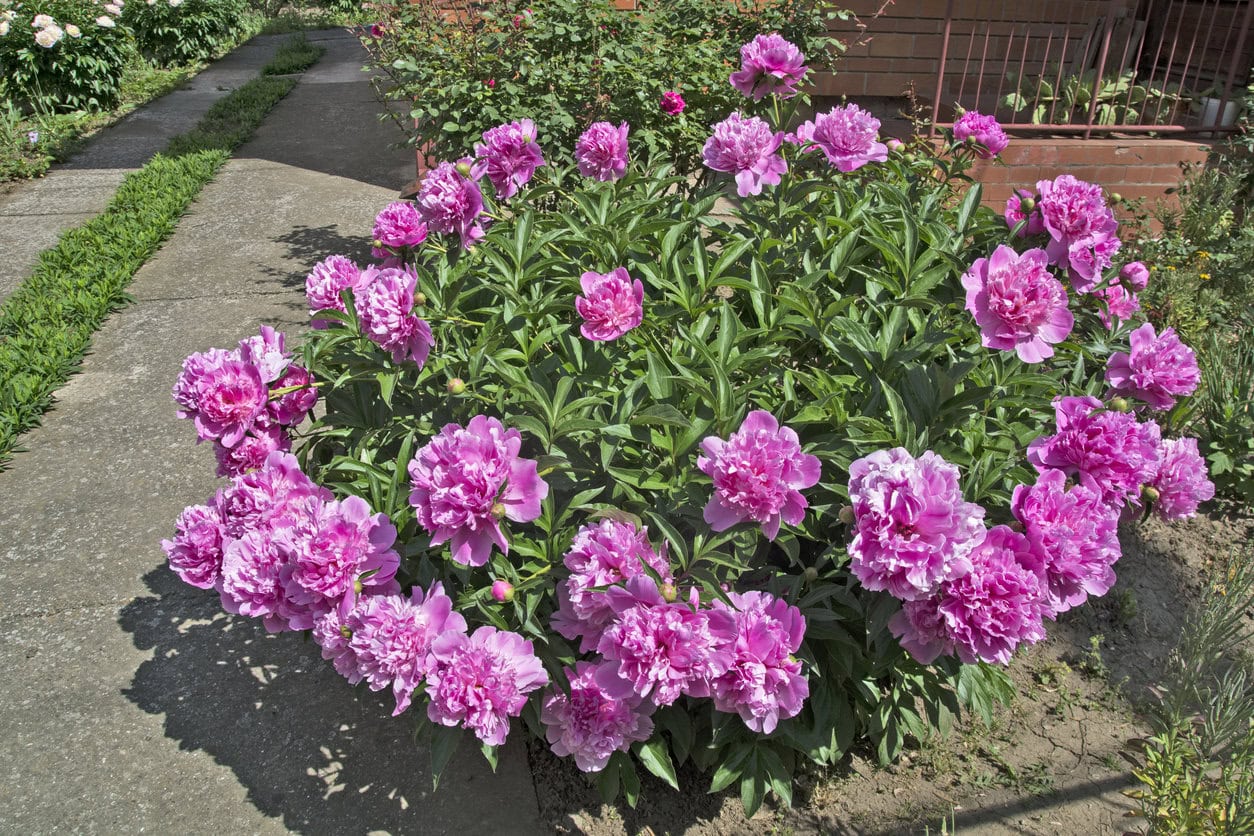
Some peonies have a bad habit of collapsing after heavy rain. But Itoh types are built a little differently. After those giant blooms fade, you aren’t left with a definition of floppiness. It turns into a solid, dark green bush that stays full and won’t make a scene for the rest of the year.
Quick reminder: Peonies can be toxic to pets if chewed, so they’re better for borders where nibbling is not an issue.
If you’re not sure what to do once the blooms are gone, I break down whether you should cut back peonies or leave them alone after flowering.
7. Salvia ‘May Night’ (USDA Zones 4-8)
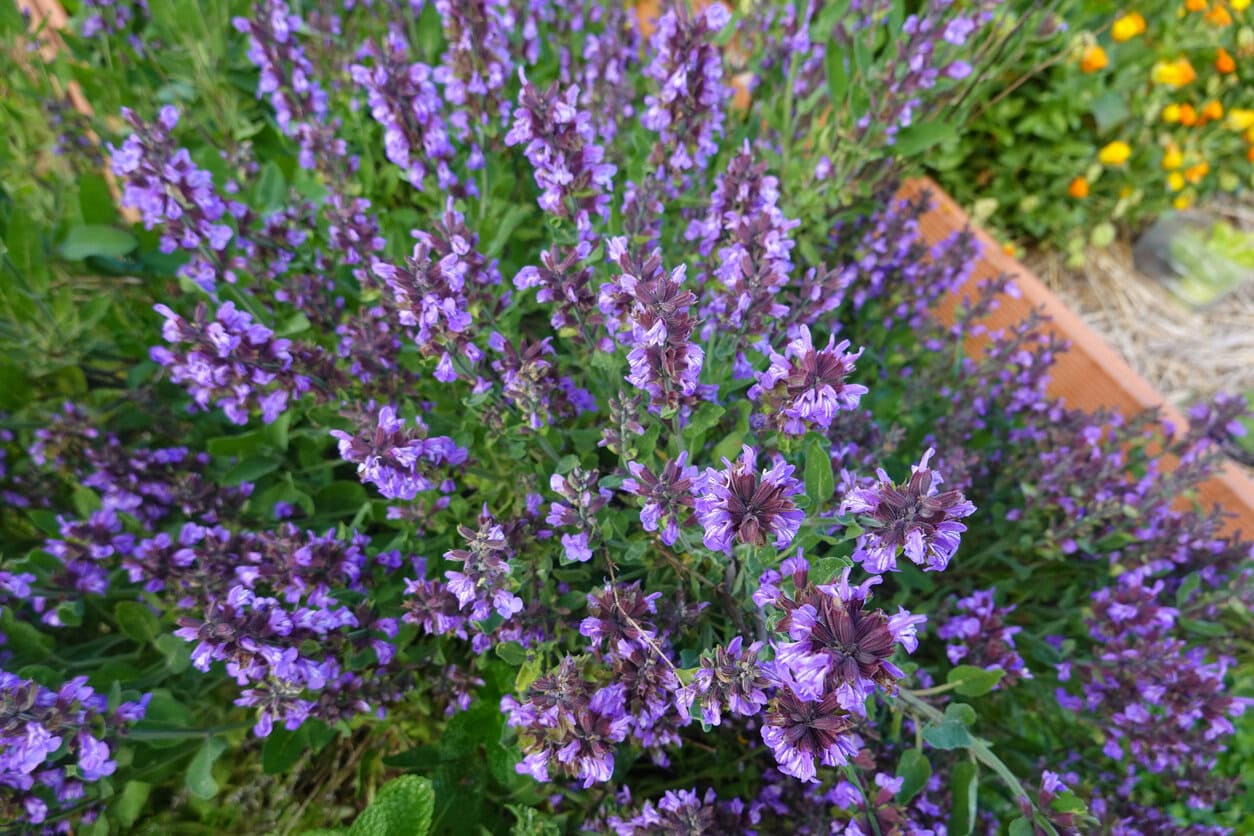
Salvia is the garden’s version of a highlighter. Those purple spikes bring a crisp vertical punch to the border and usually stay standing without much drama. Bees might swarm them, but the plant itself keeps its shape and carries on through a chaotic summer.
Quick tip: I like to cut the spent flower spikes back after the first flush. That usually keeps the plant looking tidier and can encourage another round of blooms.
If you want it to keep blooming instead of fading out early, I explain how to keep salvia blooming nonstop with a simple mid-summer trim.
8. Hardy Geranium ‘Rozanne’ (USDA Zones 5-8)
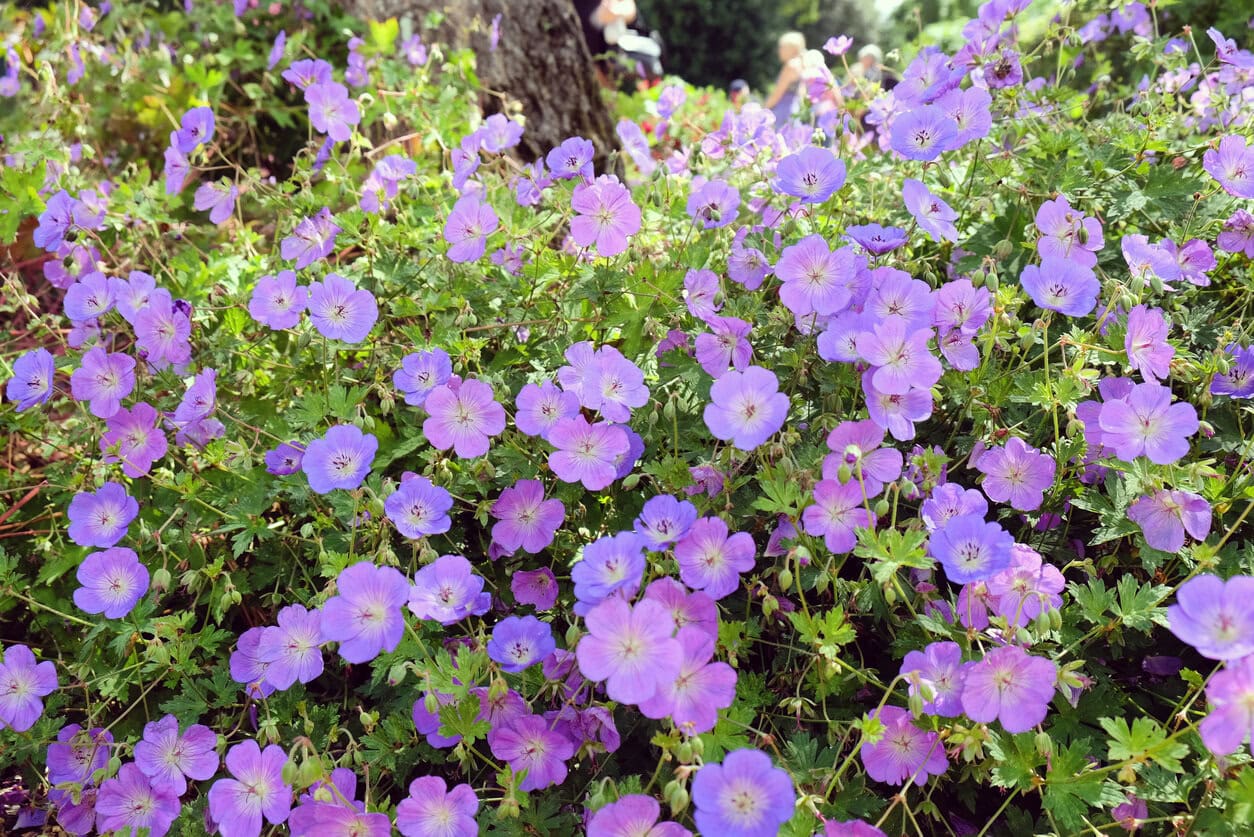
Hardy geranium ‘Rozanne’ is for anyone who thinks maintenance is a dirty word. It forms a low, violet-blue mound that fills in beautifully without trying to take over the border.
No aggressive runners or invasive roots to worry about; just a solid, long-blooming plant that looks entirely competent without any help.
Quick tip: I like to trim it back lightly if it starts looking tired in midsummer. It usually fills back in nicely and looks much neater.
9. Catmint ‘Cat’s Pajamas’ (USDA Zones 3-8)

This is the tidier version of catmint for people who like the look but not the flop. You still get soft gray-green foliage and plenty of blue-purple flowers, but in a more compact mound that behaves itself a little better at the border edge.
Quick tip: If it starts looking a little shaggy in July, give it a quick haircut, and it’ll go right back to looking like a civilized member of society.
10. Echinacea (USDA Zones 3-8)

Echinacea has sturdy stems, meaning it doesn’t need you to stake it, which already makes it more useful than half the plants in the border.
Even after the petals fade, the central cones still look cool and intentional. It’s a rustic, “I meant to do that” look that gives the birds something to snack on later and keeps the border looking interesting.
Quick tip: I like to leave the seed heads standing into fall because they still look good after bloom and make the border feel less picked-over.
If you like that natural, wildlife-friendly look, I also put together a guide on native flowers that attract pollinators better than exotic blooms.
11. Coreopsis (USDA Zones 3-9)
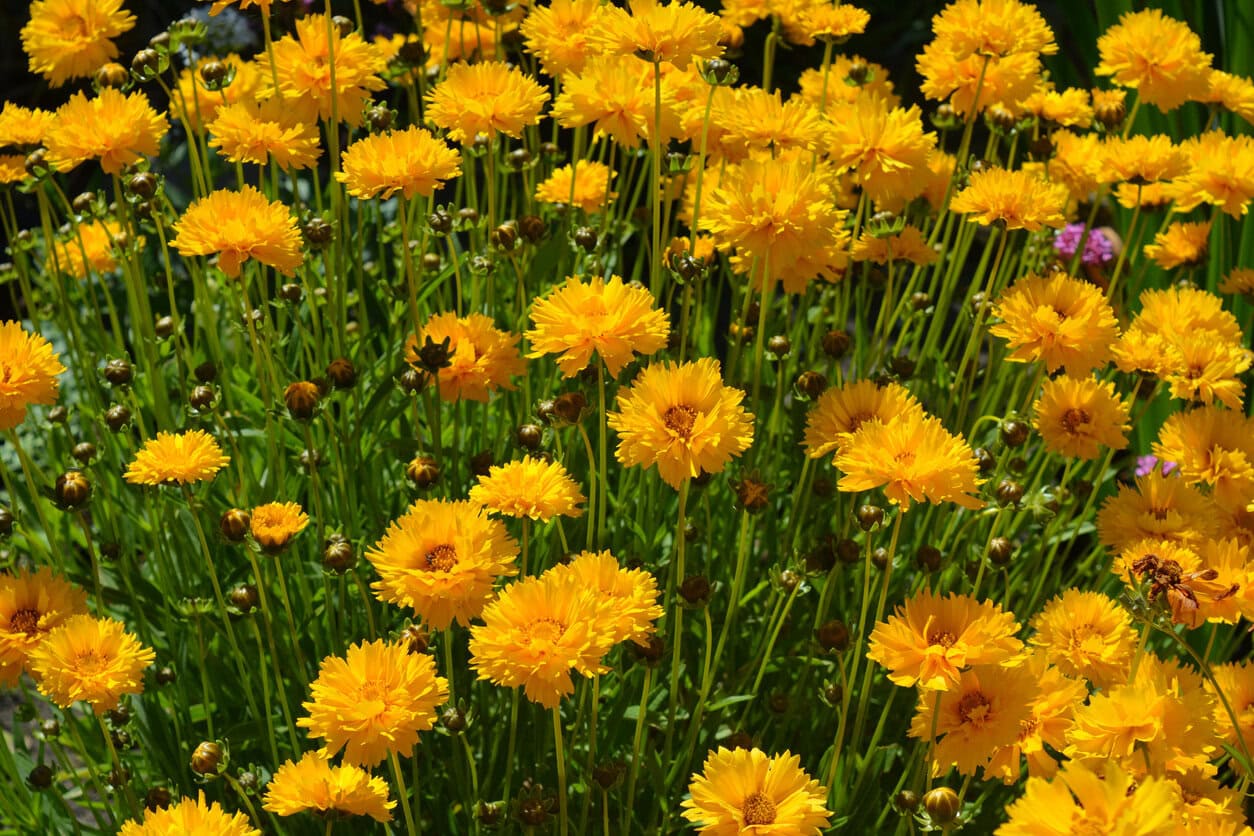
These are built like wiry little athletes. They handle the sunny, forgotten corner of the yard with grace and keep pumping out cheerful color for weeks.
Instead of turning into a floppy little tragedy, they usually stay lively and bright with very little help. They’re basically cats in plant form, just slightly more cheerful.
Quick recommendation: I recommend clump-forming coreopsis varieties like ‘Early Sunrise’ or ‘Sun Up’ if you want the cheerful color without as much spreading.
12. Azalea (USDA Zones 5-8)
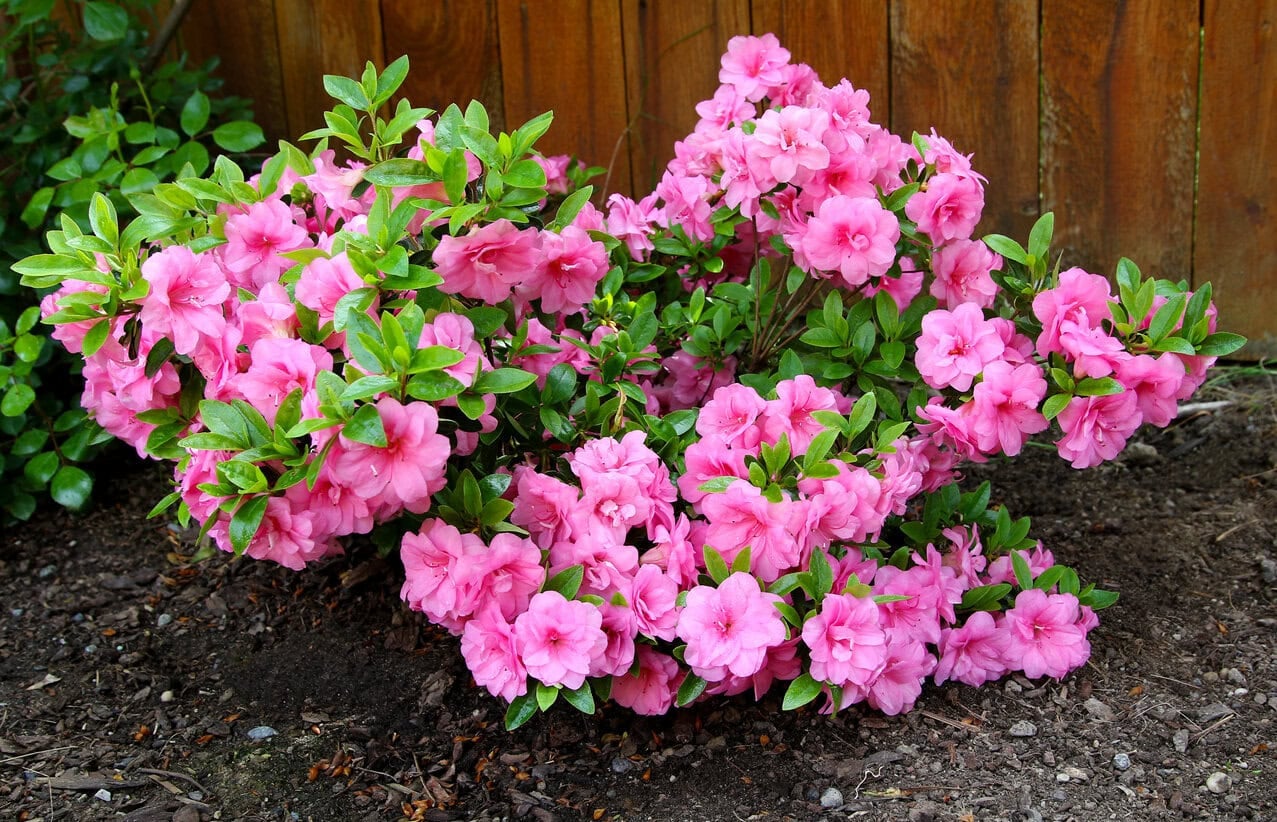
Azaleas are the suburban gold standard. They grow in dense, rounded mounds that stay neat and don’t wander into the lawn or start climbing the house.
In spring, the whole shrub turns into a solid block of color that hides every leaf and branch. It’s the kind of plant that makes the border look polished, like you have a pro landscaping crew on speed dial.
Quick reminder: Azaleas are toxic to pets and people if eaten, so this is one to avoid if you have curious kids or animals around.
If you’re filling a shady space, we also rounded up shade-tolerant perennials that brighten low-light spots.
Flowers That Stay in Their Lane
Some of these are technically shrubs or mounding plants, but they all share one beautiful personality trait: they know how to stay put. They aren’t trying to escape your border one runner at a time or turn into next year’s problem.
You get to spend your Saturday morning with a coffee instead of wrestling a root system that’s trying to drag your fence into the neighbor’s yard. They stay put, they look sharp, and they mind their own business.

Hey there! I’m Dragana, an ecologist with a serious soft spot for soil and the magic that sprouts from it. My Adriatic garden is a bit of a wild bunch: aromatic herbs and roses doing their fragrant thing, juicy fruits and stubborn olive trees with a Mediterranean attitude. I’m here to unearth gardening wonders; are you ready to dig in with me?