9 Annual Flowers to Plant in April for Nonstop Summer Color
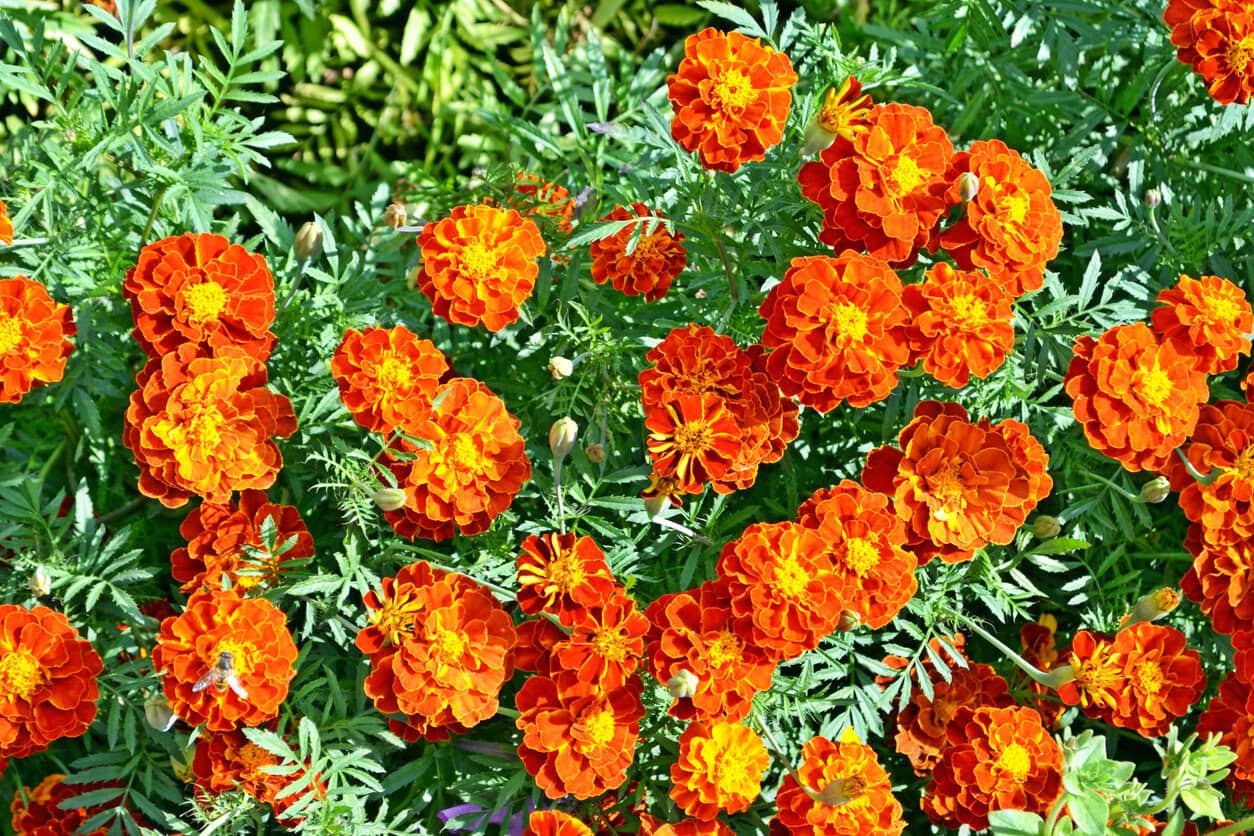
Another April, another battle against muddy boots, soggy socks, and aching knees. On the bright side, it’s a chance to fix up your backyard with colorful annuals. On the less bright side, your chiropractor will finally afford that vacation home this season.
If you want these flowers to keep going as long as possible, we explain how to keep annuals blooming into fall in another guide.
Sow What? These 9 Annual Flowers!
April’s here to ruin your nap schedule with these nine flowers. You’re welcome.
Quick note: The USDA zones below show where these flowers can be grown, but not all of them should be sown at the same time. If you garden in a colder zone, some warm-season annuals will need to wait until after your last frost, when the soil has warmed up a bit.
1. Zinnia (USDA Zones 3-11)

Zinnias are the overachievers of the annual world, pumping out bold, colorful blooms like they’re trying to win a county fair ribbon. Bees and butterflies show up fast, and they rarely leave.
If you want nonstop color with minimal effort, plant zinnias. It’s a great way to look like you know what you’re doing while you’re mostly just scattering seeds.
They don’t care about poor soil, as long as they get full sun and you don’t drown them. Wait until after the last frost, toss the seeds, and let them go.
Quick tip: Deadhead if you feel ambitious, and they’ll keep blooming until the first frost shuts things down.
If you’re not sure how to do that, we explain exactly how to keep zinnias blooming in this guide.
2. Blanket Flower (USDA Zones 3-10)

Toss some seeds into the yard and pretend you possess actual skill. Because Gaillardia pulchella hails from harsh plains, heat waves mean absolutely nothing to it.
It blooms intensely in a sea of tiny pizza colors while you hide indoors, avoiding sunstroke. It prefers sandy soil and thrives in even the poorest soil.
Expect it to bloom for months, often right up to the first frost, provided you put the watering can down and go nap instead. Impressed looks guaranteed.
If your summers get intense, I also put together a guide on heat-tolerant annuals that can handle it.
3. Common Sunflower (USDA Zones 2-11)

Simply jab a nail-sized seed into the ground. Once Helianthus annuus starts growing, a golden eye will soon press against your second-story window and judge your midnight snacking.
These stalks offer sturdy perches for goldfinches while bees bask in pollen. You gain height, privacy, and bird entertainment with almost no effort.
Quick tip: Taller varieties may need support, especially in windy spots, unless you want to watch them flop during the first summer thunderstorm.
4. Plains Coreopsis (USDA Zones 3-10)

If you want to grow Coreopsis tinctoria, just toss the seeds wherever you want a chaotic splash of yellow and mahogany.
These tough little things actually prefer poor soil, so there’s no need to fuss over fertilizers. They handle heat like a cactus and bloom until winter finally shuts everything down.
Goldfinches will eventually treat the fading heads like a free roadside diner, though they never offer to help with the weeding.
Quick tip: Thin them out if they get too cramped, otherwise, live and let live.
If your soil leans more clay than ideal, we wrote a guide on flowers that actually grow well in clay soil.
5. Lemon Beebalm (USDA Zones 3-9)
Plant Monarda citriodora if you enjoy watching things thrive despite your best attempts at neglect. Its purple-pink flowers and sharp, citrus-scented leaves offer the only decent reward for a Saturday spent weeding.
Once it decides your garden is home, it will happily self-seed and show up again next year. It prefers dry, rocky dirt, and no trace of fancy fertilizer.
Quick tip: Leave the dry stalks up for the birds later, assuming you still care about the yard by then.
If you like plants that thrive with minimal effort, we’ve got a list of flowers that practically take care of themselves.
6. Marigolds (USDA Zones 2-11)
Marigolds are loud in the best way. Bright oranges and yellows that don’t blend in, don’t tone it down, and definitely don’t apologize for it.
They’ve been planted in American gardens forever for a reason. They grow fast, handle heat well, and keep blooming long after fussier flowers give up. Sow them after the last frost in full sun, and they’ll get to work.
Quick tip: They’re often planted to help deter certain garden pests, while others just enjoy their color. Either way, they earn their spot.
7. Nasturtium (USDA Zones 2-11)

Nasturtiums are what you plant when you want something a little different without making your life harder. The round leaves, trailing vines, and bright flowers make them look fancier than they actually are.
They prefer poor soil and will sulk if you try to spoil them. Rich soil gives you more leaves than flowers, which feels like a scam. Push the seeds into the soil after the last frost, give them sun, and let them wander.
Quick tip: The flowers and leaves are edible!
If you want more low-effort options like this, I also put together a list of easy plant-it-and-forget-it annuals.
8. Cornflower (USDA Zones 2-11)
Cornflowers are for people who want cottage garden charm without acting like they run a cottage. The blue blooms look soft and delicate, but the plants themselves are much less dramatic than they appear.
They don’t ask for much beyond sun and halfway decent drainage. In fact, too much rich soil just gives them extra leaves and fewer flowers.
Scatter the seeds in April, let them get on with it, and enjoy the show.
Quick tip: They make excellent cut flowers if you like making bouquets.
9. Cosmos (USDA Zones 2-11)

Plant cosmos if you want a wildflower look without the effort. Their airy blooms make everything feel charming, even if the rest of your yard is questionable.
They like full sun, poor soil, and a general lack of interference. In fact, too much fertilizer just gives you a lot of leafy nonsense and not nearly enough flowers, which feels rude.
Scatter seeds after the last frost, ignore them for a while, and enjoy the nonstop color until the first frost ends the show.
Quick Tips for Direct Sowing Seeds
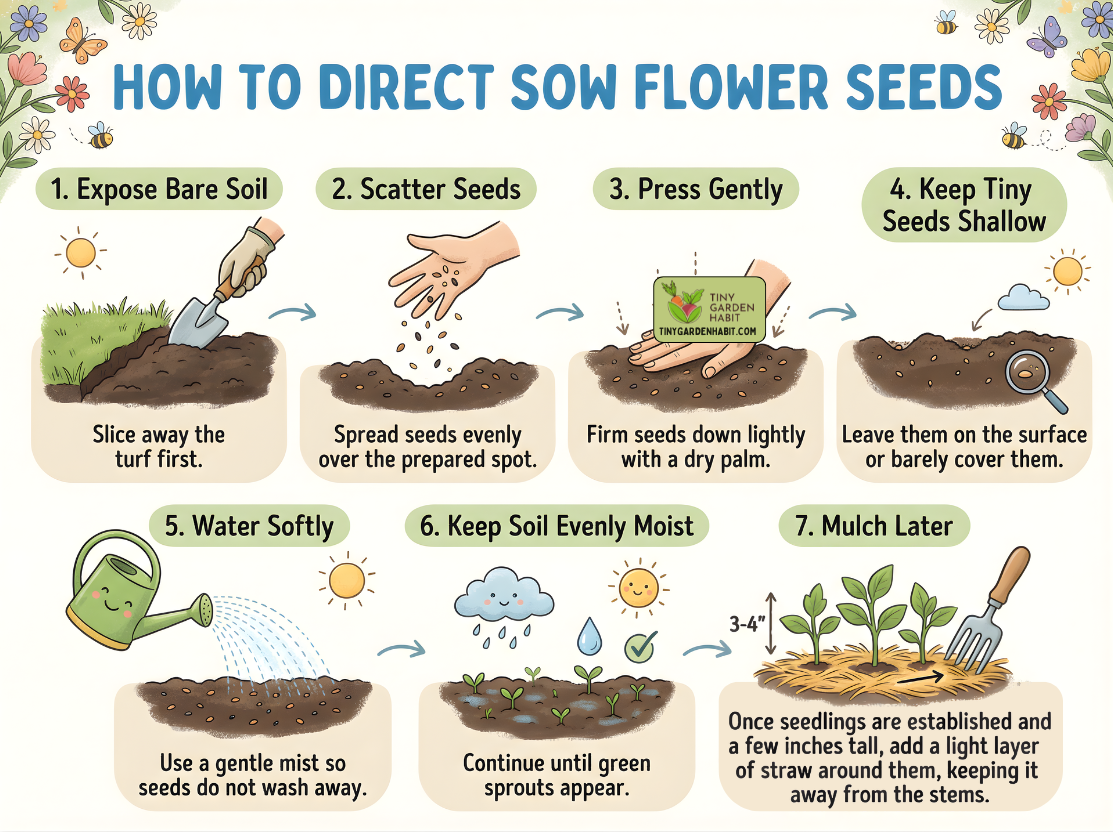
If you’re going to scatter seeds and hope for the best, here’s how to slightly improve your odds without turning it into a full-time job:
- Start with bare soil, not grass or weeds.
- Scatter seeds evenly instead of dumping them in one spot.
- Press seeds in gently, don’t bury tiny ones.
- Water softly so you don’t wash them away.
- Keep soil lightly moist until seedlings appear.
- Add mulch later, once plants are a few inches tall.
Do this much, and you’ll look like you know what you’re doing, even if you’re still mostly guessing.
We also break this down in more detail in our guide on what you can direct sow in April.
Seed You Later
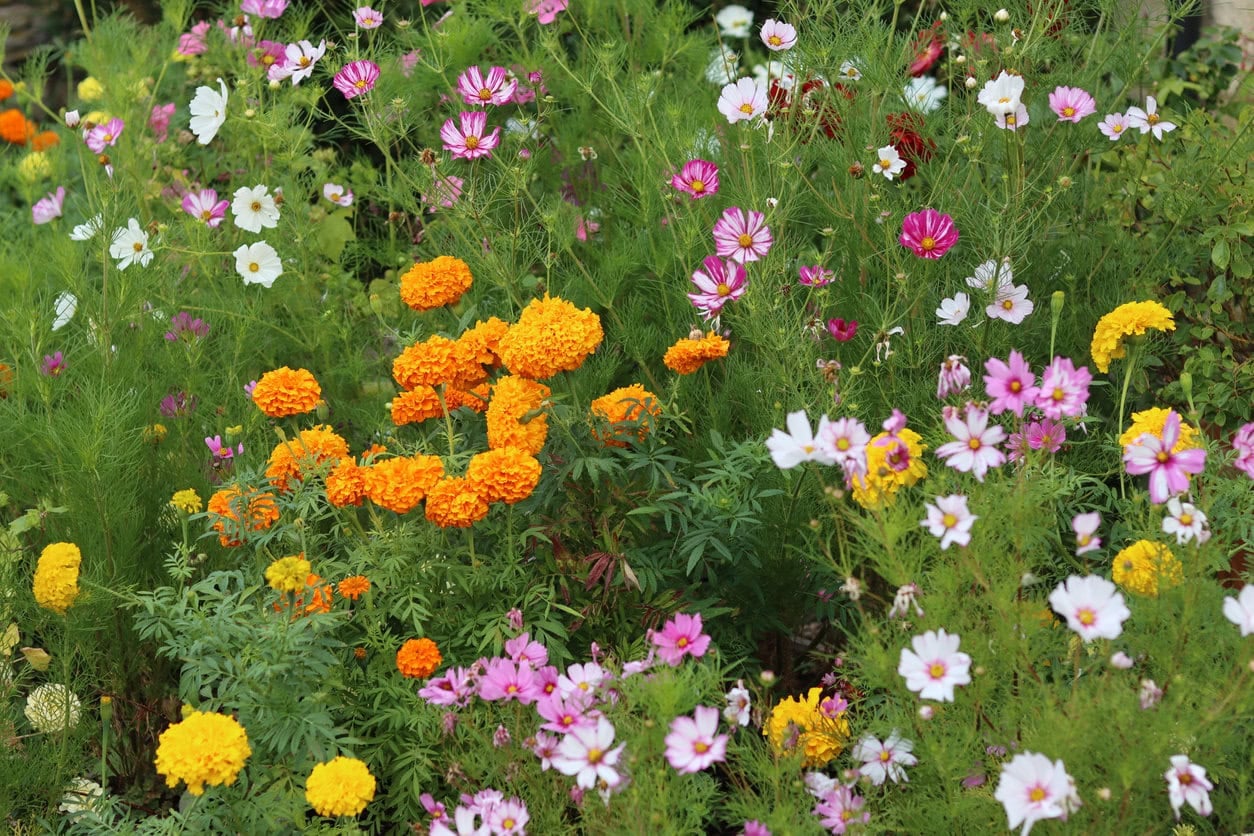
Growing a stunning yard from seed in April doesn’t require a green thumb, just a lack of interference, especially when you plant hardy, self-sufficient annuals. Just watch how they handle the heat while you handle the hammock.

Hey there! I’m Dragana, an ecologist with a serious soft spot for soil and the magic that sprouts from it. My Adriatic garden is a bit of a wild bunch: aromatic herbs and roses doing their fragrant thing, juicy fruits and stubborn olive trees with a Mediterranean attitude. I’m here to unearth gardening wonders; are you ready to dig in with me?