9 Companion Plants That Boost Cucumber Growth & Keep Pests Away
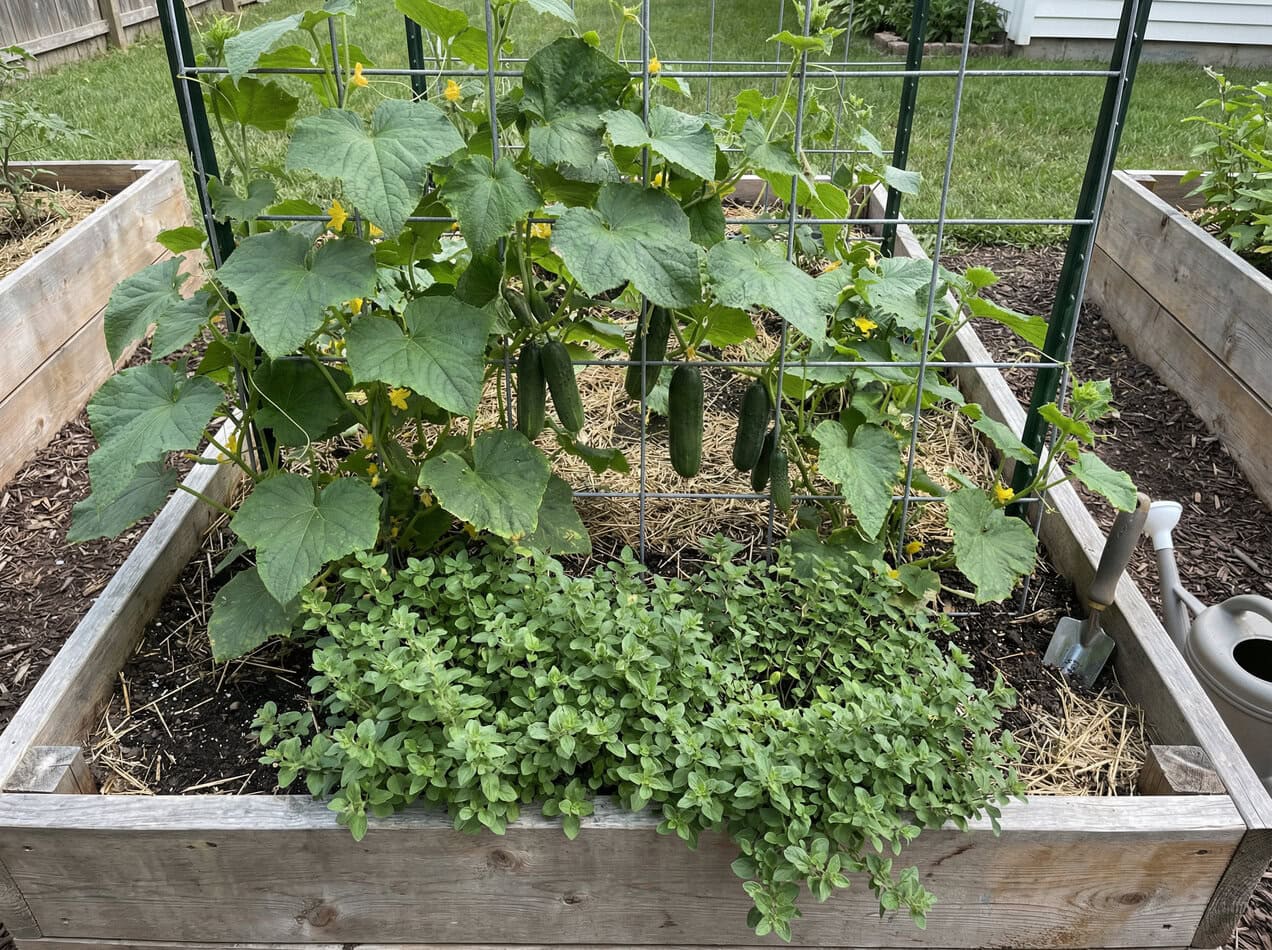
To anyone new here, I’m a big advocate of companion planting.

Not because it’s “trendy”, but because it’s one of those simple gardening pairs that genuinely worked for me and made a noticeable difference in my garden over time.

In this article, I’ll be sharing 9 companion plants that help boost cucumber growth while also keeping common pests in check.

9 Companion Plants for Cucumbers

1: Nasturtiums (USDA Zones 2-11)
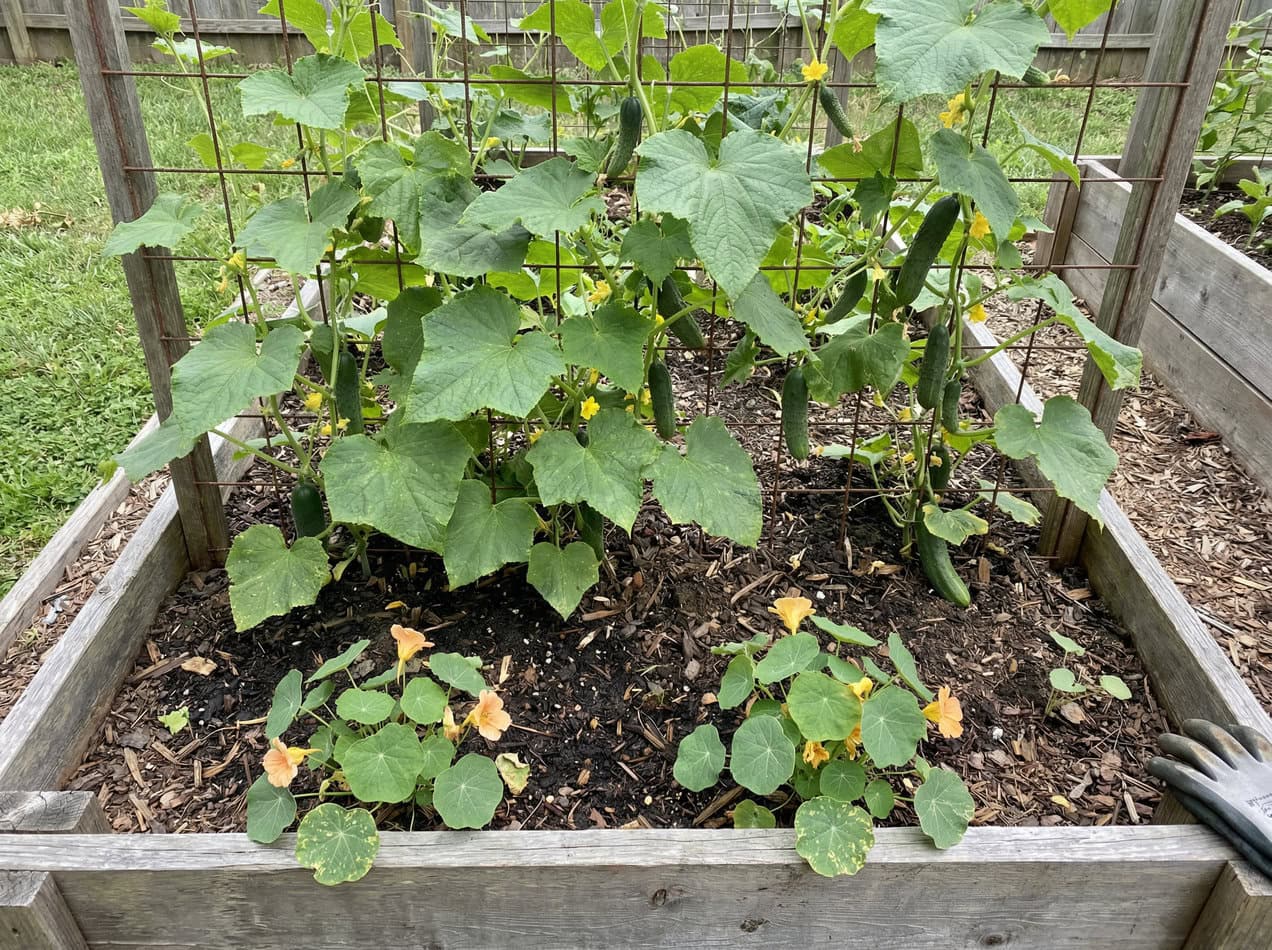
Nasturtiums, as some of you might already know, are often planted as trap crops close to main vegetables like cucumbers. I like to tuck them right along the edges of my cucumber beds, and I’ve noticed they do a great job of pulling pest attention away from the vines.

Pests such as aphids, cucumber beetles, and whiteflies are more likely to settle on the nasturtiums first, which helps keep cucumbers under less stress and growing more steadily.

Quick tip: I’ve had the best results when nasturtiums are planted a little closer to the cucumbers than other flowers, so pests find them first.

2: Marigolds (USDA Zones 2-11)
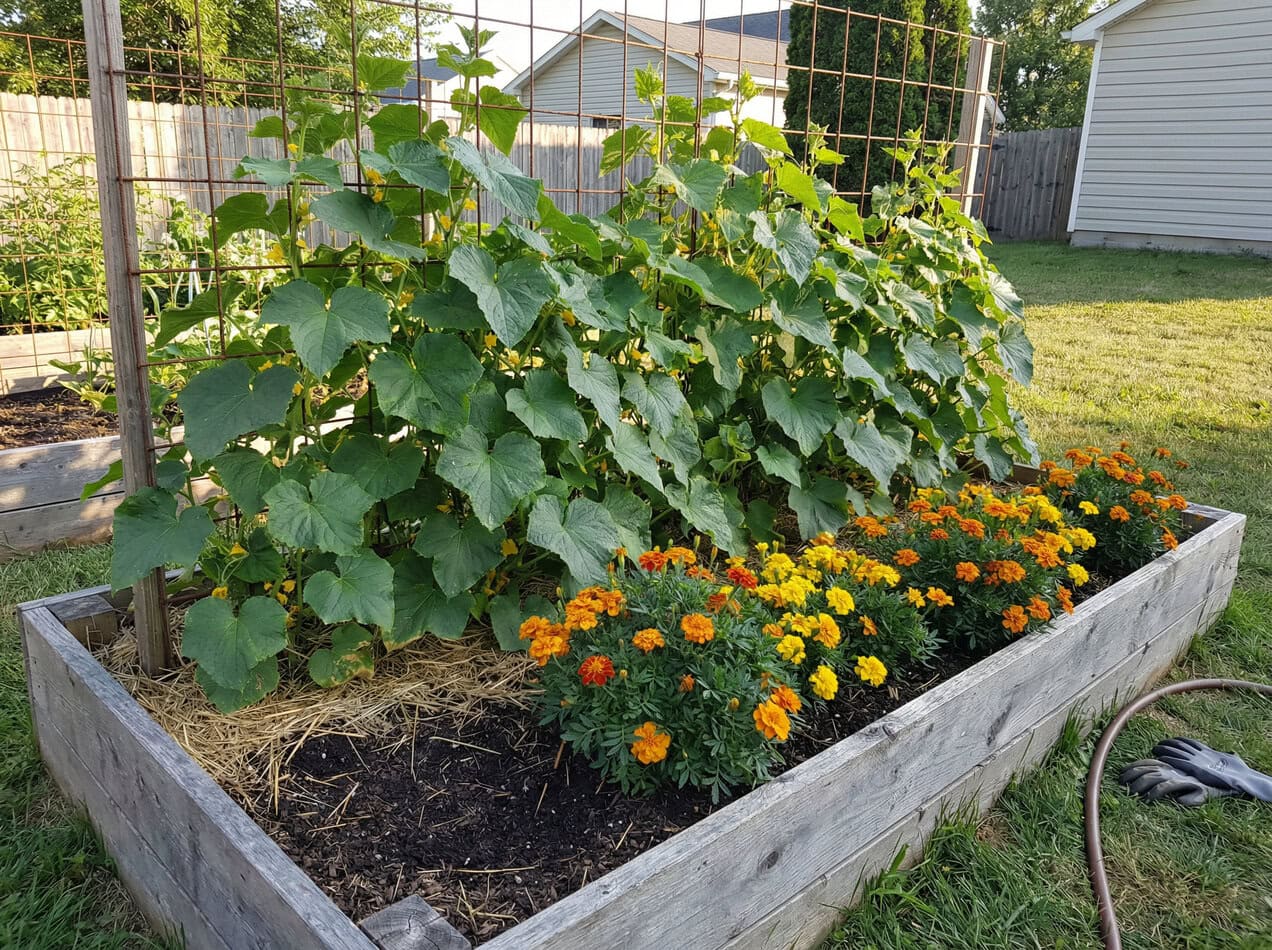
Cucumbers and MarigoldsCucumbers and Marigolds

Marigolds are a classic companion plant for a reason. I like to plant them near my cucumbers because they help reduce soil pests, especially nematodes, which can weaken plants over time.

Rather than working through scent alone, marigolds release natural compounds through their roots that improve soil conditions around nearby plants. In my experience, cucumbers growing close to marigolds tend to look stronger and more resilient throughout the season!

3: Radishes (USDA Zones 2-10)
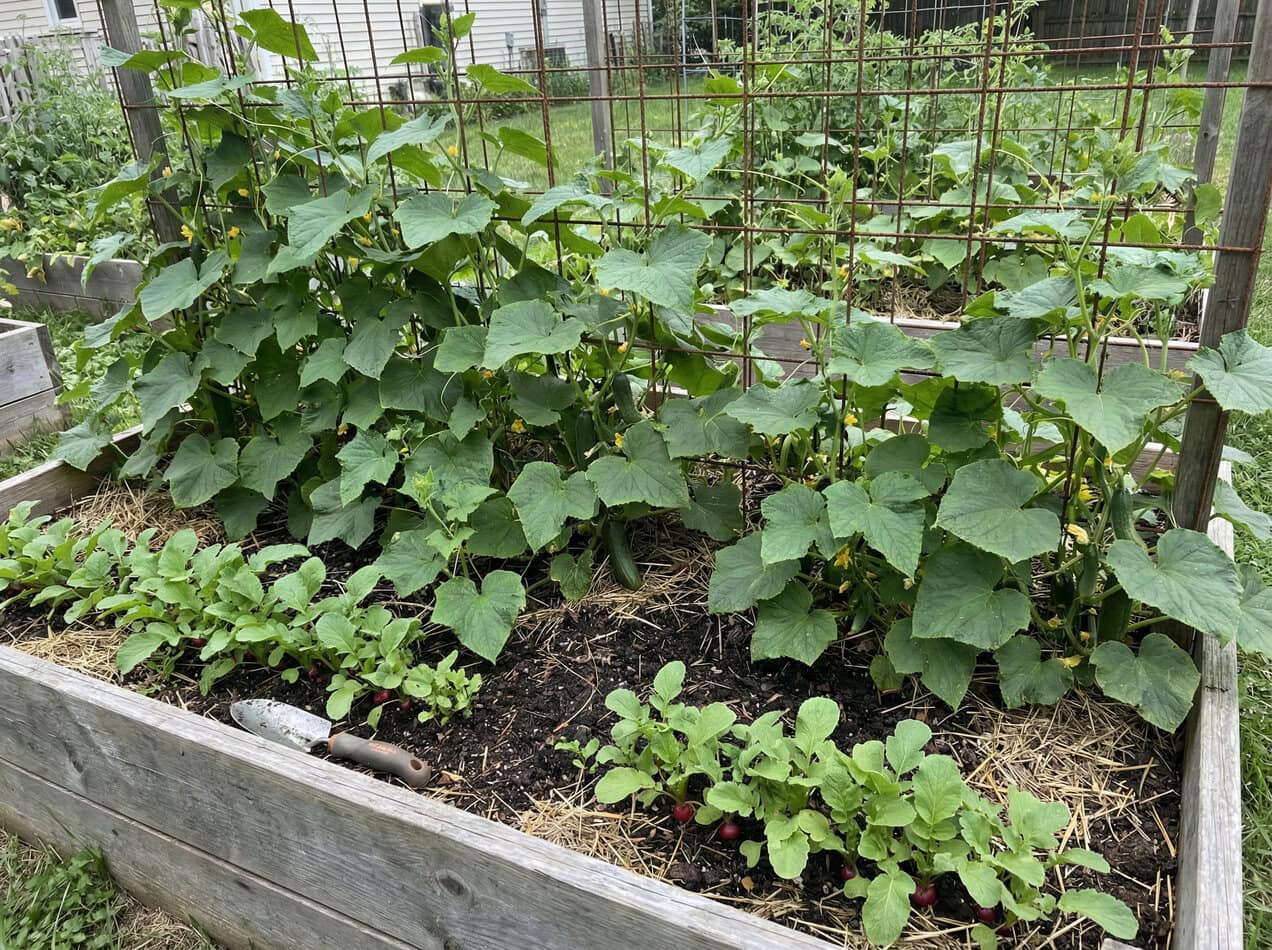
Cucumbers and RadishesCucumbers and Radishes

Like nasturtiums, radishes can work well as decoy plants in the garden. I often sow them near my cucumbers early in the season, and I’ve noticed they tend to draw the attention of pests like flea beetles and cucumber beetles away from the vines.

Radishes and cucumbers are also easy companions because they don’t compete much for space or nutrients.

Quick tip: I like to plant radishes along the outer rows of cucumber beds so they do their job early and free up space later on.

4: Dill (USDA Zones 2-11)
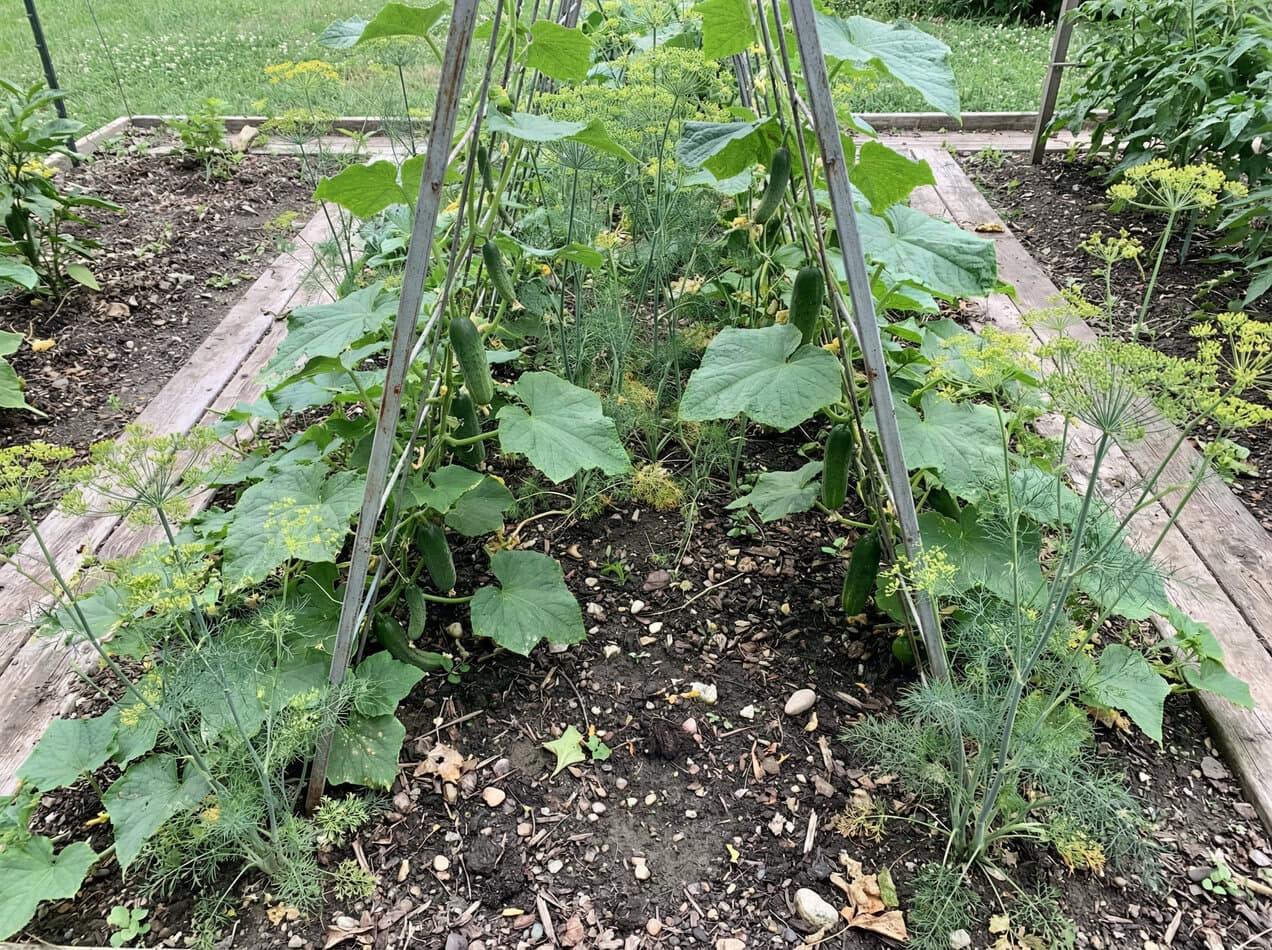
Cucumbers and DillCucumbers and Dill

Dill does something a little different in the garden compared to most companion plants. I like to let a few dill plants flower near my cucumbers because they attract beneficial insects that help keep pest numbers under control.

When dill blooms, it draws in ladybugs, lacewings, hoverflies, and predatory wasps, all of which feed on common cucumber pests. Over time, I’ve noticed this helps create a more balanced garden environment where pest problems are less likely to spiral out of control.

Quick tip: Let at least one dill plant go to flower instead of harvesting it all early, that’s when it becomes most useful for pest control!

5: Basil (USDA Zones 4-11)
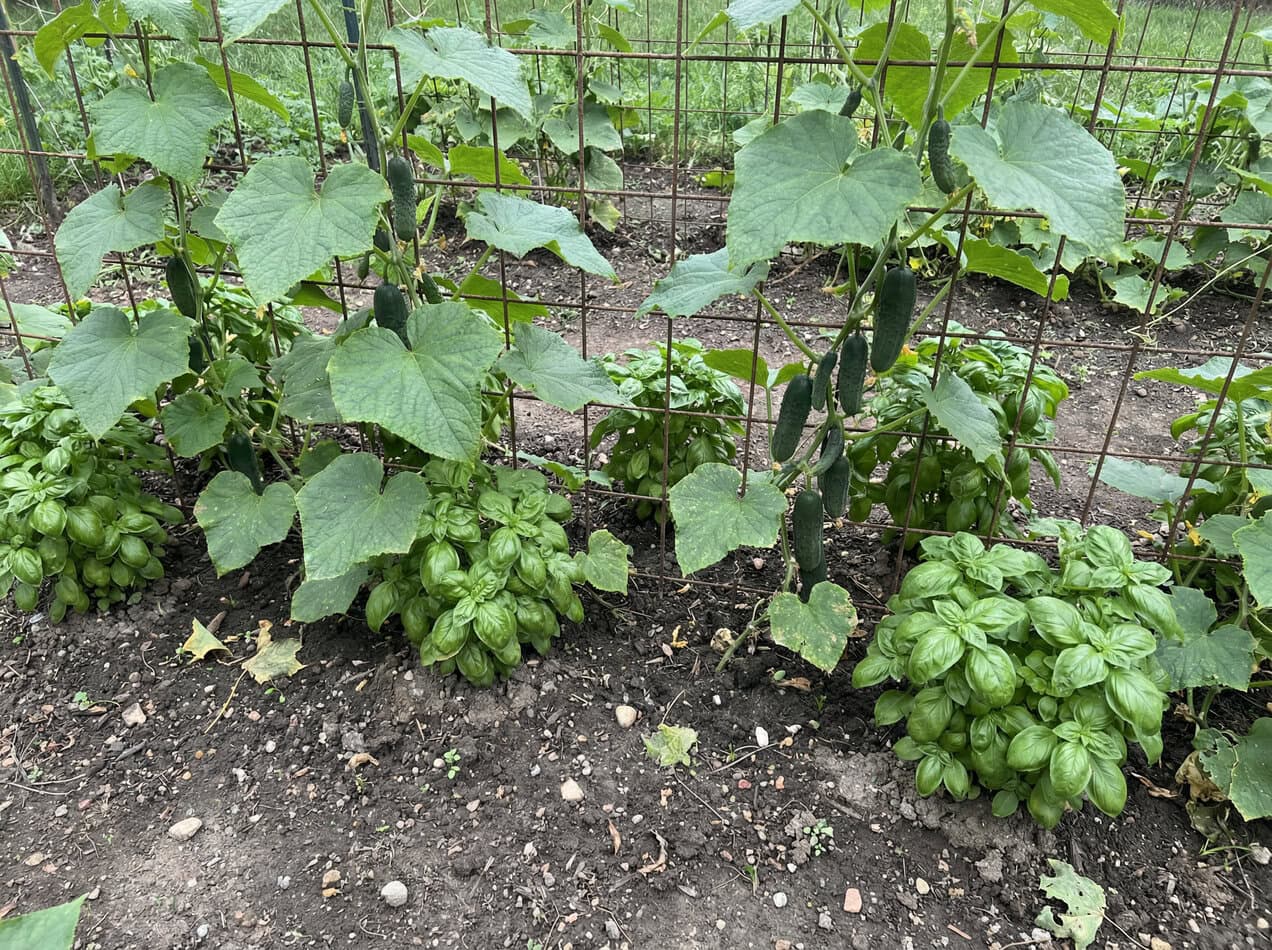
Cucumbers and BasilCucumbers and Basil

As much as I love basil for the fragrance it adds to the garden, I’ve also found it to be a helpful companion for cucumbers. I like planting basil nearby because its strong scent can discourage pests like flies and mosquitoes from lingering around the vines.

I’ve also noticed that there is a subtle flavor improvement. At the very least, basil helps create a healthier growing environment, which is always a win in my book!

Quick tip: Basil does best in full sun, so plant it where it won’t get shaded out once cucumber vines start spreading.

6: Beans (USDA Zones 3-10)
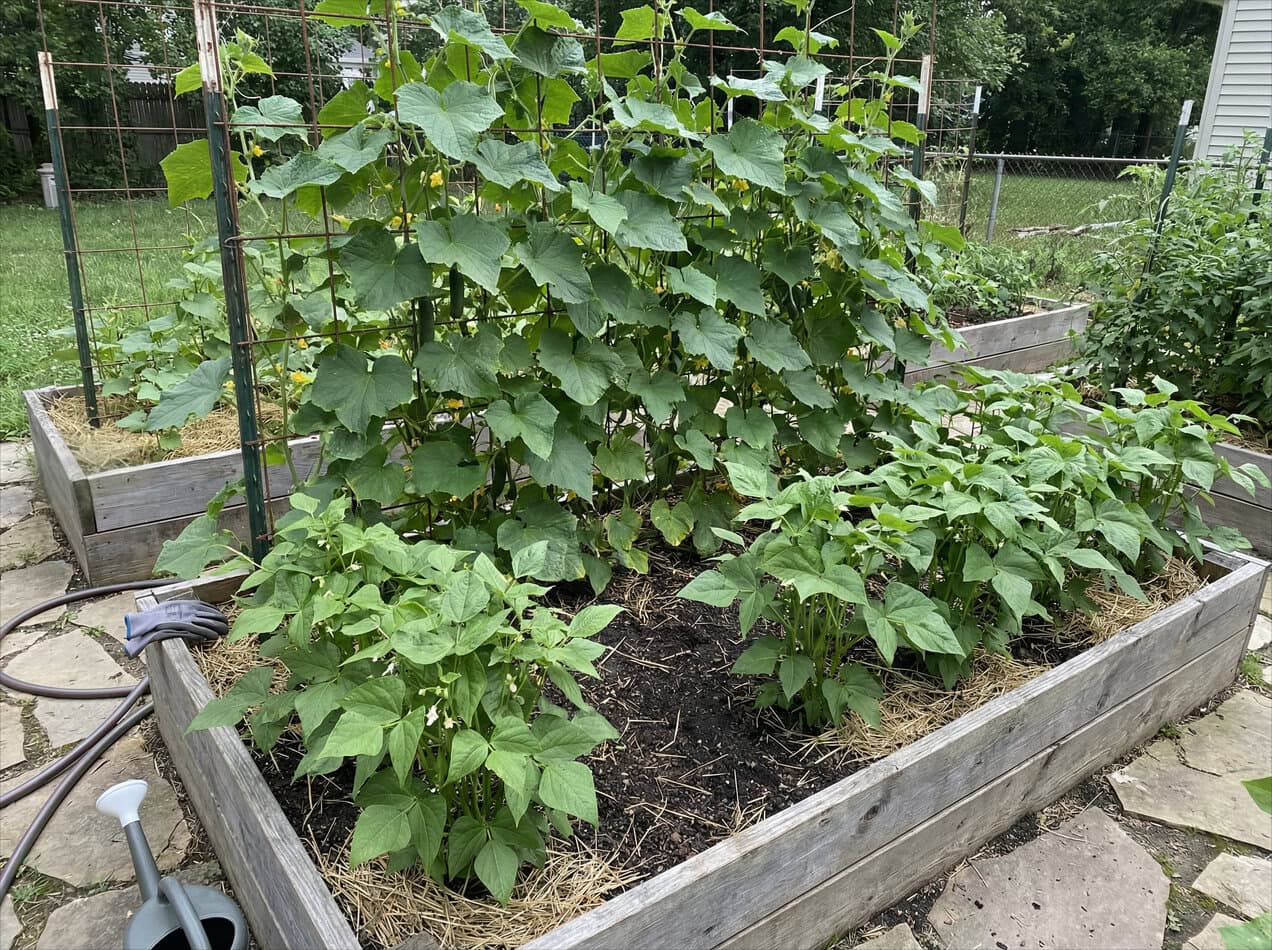
Cucumbers and Bush BeansCucumbers and Bush Beans

As many of you may already know, beans are nitrogen-fixing plants, which means they help improve soil fertility over time (not instantly, of course!).

I like pairing beans with cucumbers because they don’t compete heavily for space and tend to grow well together. In my experience, this pairing works best in well-spaced beds where both plants have room to thrive.

7: Lettuce (USDA Zones 2-10)
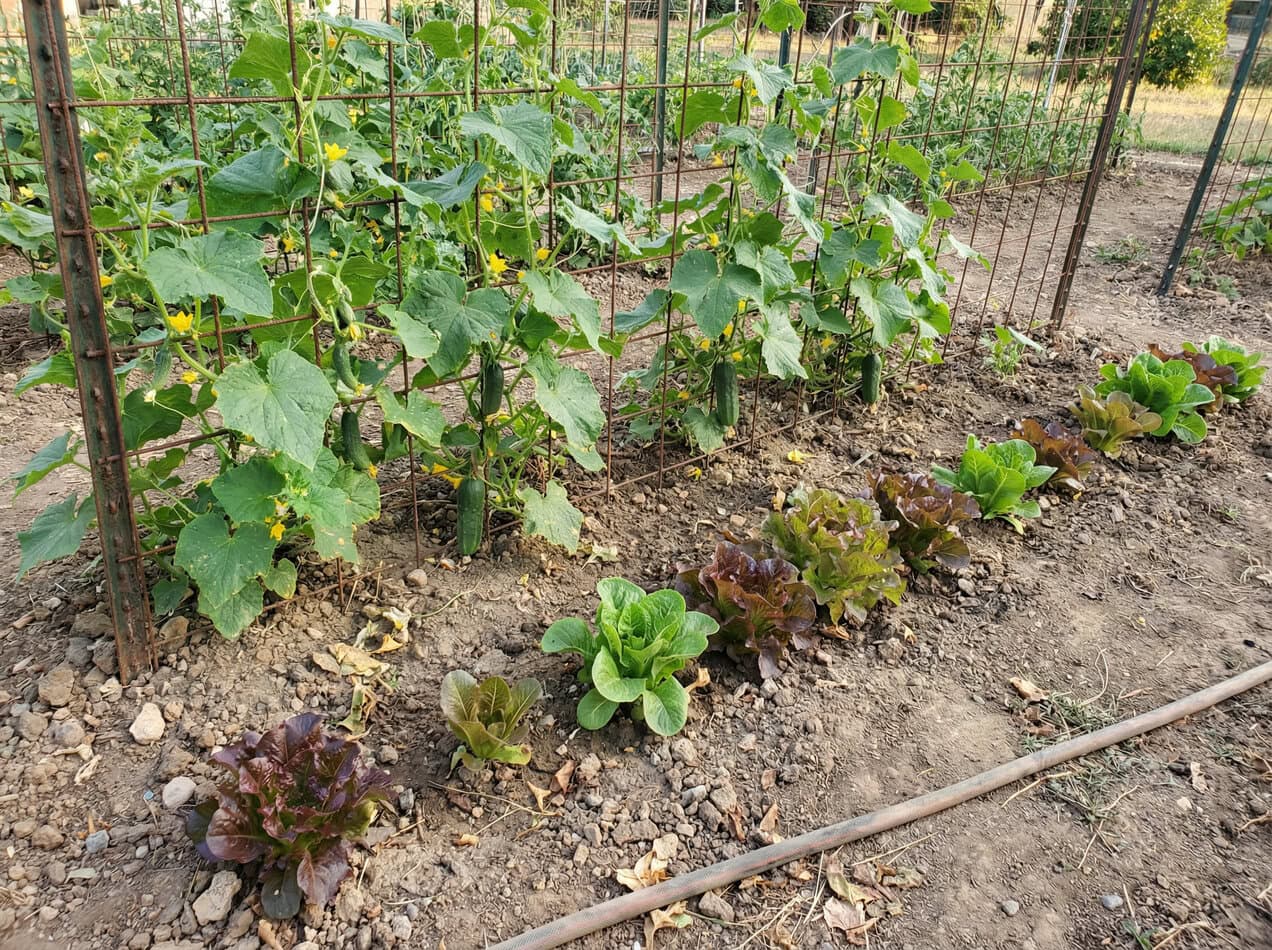
Cucumbers and LettuceCucumbers and Lettuce

Lettuce may not be the most exciting crop in the garden, but it’s surprisingly useful as a companion plant.

I like to plant it early in the season and densely enough, so it helps shade the soil, keep it cooler, and retain moisture; all things cucumbers really benefit from as temperatures rise.

8: Sunflowers (USDA Zones 2-11)

Cucumbers and SunflowersCucumbers and Sunflowers

Because of their tall, upright growth, sunflowers can be used as informal support for cucumber vines. I’ve tried this with lighter cucumber varieties, and while it works, I’ve found it’s best to add extra support if the vines get heavy.

Sunflowers are also excellent for attracting pollinators thanks to their large, bright blooms. With more bees visiting the garden, cucumbers get better pollination, which leads to more consistent fruit set throughout the season.

Quick tip: Plant sunflowers slightly north of your cucumbers so they don’t block sunlight as they grow taller.

9: Oregano (USDA Zones 5-10)

Cucumbers and OreganoCucumbers and Oregano

I’ve mentioned oregano’s strong, sometimes polarizing aroma in a few of my articles, and while I don’t find it unpleasant, it’s definitely powerful. I’ve grown oregano many times over the years, and I’ve noticed that areas where it’s planted tend to have fewer lingering pests and mosquitoes.

When planted near cucumbers, oregano can help reduce pest pressure from aphids and spider mites, and it may discourage some insects from settling in the area. It’s not a cure-all, but it works well as part of a balanced companion planting setup!

Bonus: Sweet Alyssum (USDA Zones 2-11)
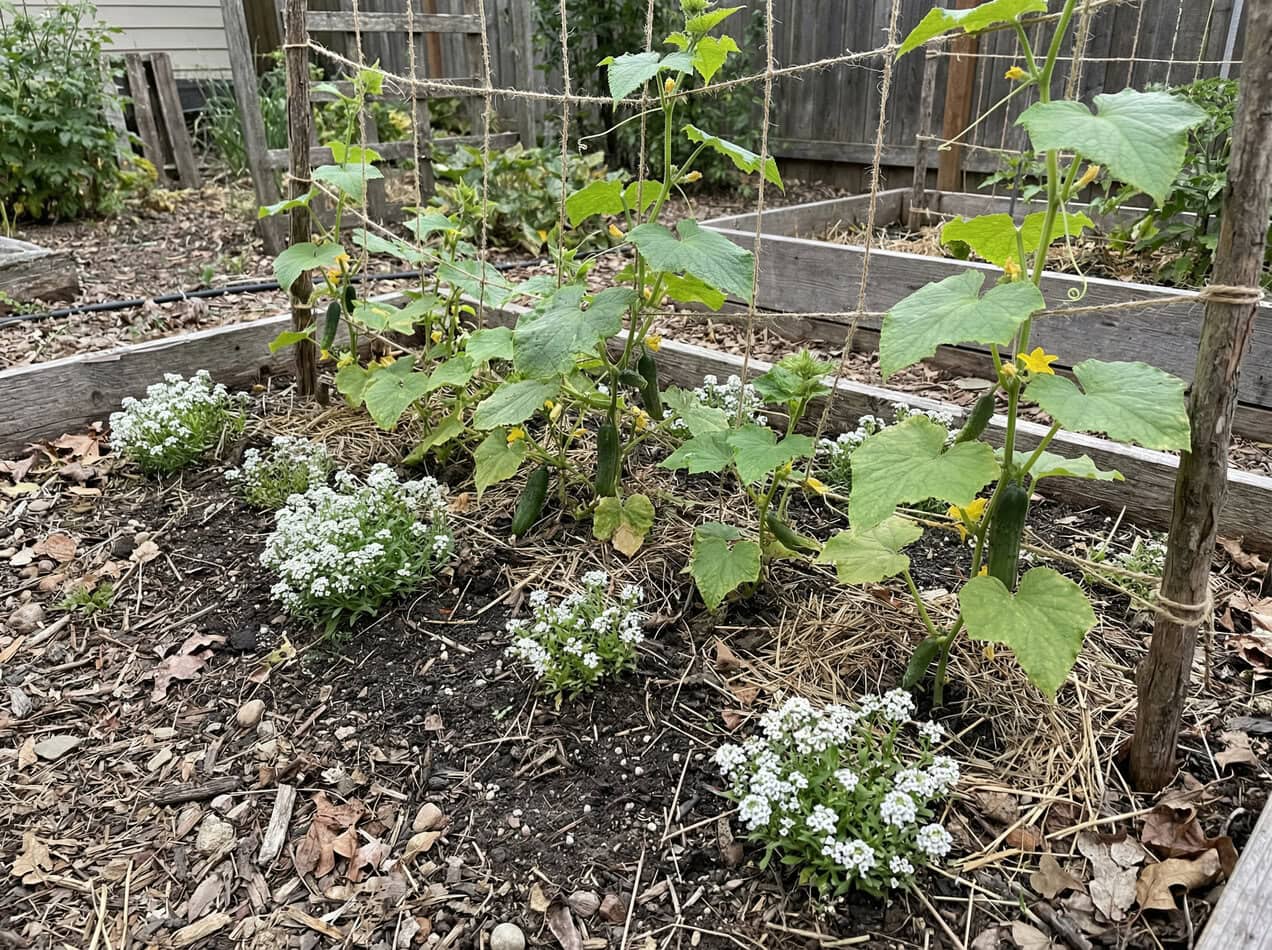
Cucumbers and Sweet AlyssumCucumbers and Sweet Alyssum

Sweet alyssum is one of those plants that quietly does a lot of work in the garden. I like planting it near cucumbers because it attracts a steady stream of beneficial insects without taking up much space.

When in bloom, it draws in hoverflies, lacewings, and parasitic wasps, all of which help control aphids and other pests that commonly bother cucumbers.

It also acts as low-growing ground cover, helping shade the soil and retain moisture around the plants.

Conclusion

Pairing plants and herbs is my new favorite time-pass activity. I can tell you at least 10 more plants that would go well alongside cucumbers but since I had to keep this list short, these are all you’re going to get for today. 

Happy planting! 

Rita DiasRita Dias

Rita Dias

I’m Rita, passionate about flowers, plants and growing my own vegetables at home. I live in an apartment, but I still have my garden, I intend to use all my knowledge to help you also have a lively, happy and productive garden (even in an apartment).

Related Articles

Leave a Reply

Your email address will not be published. Required fields are marked *

9 Companion Plants That Boost Cucumber Growth & Keep Pests Away

To anyone new here, I’m a big advocate of companion planting.

Not because it’s “trendy”, but because it’s one of those simple gardening pairs that genuinely worked for me and made a noticeable difference in my garden over time.

In this article, I’ll be sharing 9 companion plants that help boost cucumber growth while also keeping common pests in check.

9 Companion Plants for Cucumbers

1: Nasturtiums (USDA Zones 2-11)

Nasturtiums, as some of you might already know, are often planted as trap crops close to main vegetables like cucumbers. I like to tuck them right along the edges of my cucumber beds, and I’ve noticed they do a great job of pulling pest attention away from the vines.

Pests such as aphids, cucumber beetles, and whiteflies are more likely to settle on the nasturtiums first, which helps keep cucumbers under less stress and growing more steadily.

Quick tip: I’ve had the best results when nasturtiums are planted a little closer to the cucumbers than other flowers, so pests find them first.

2: Marigolds (USDA Zones 2-11)

Cucumbers and MarigoldsCucumbers and Marigolds

Marigolds are a classic companion plant for a reason. I like to plant them near my cucumbers because they help reduce soil pests, especially nematodes, which can weaken plants over time.

Rather than working through scent alone, marigolds release natural compounds through their roots that improve soil conditions around nearby plants. In my experience, cucumbers growing close to marigolds tend to look stronger and more resilient throughout the season!

3: Radishes (USDA Zones 2-10)

Cucumbers and RadishesCucumbers and Radishes

Like nasturtiums, radishes can work well as decoy plants in the garden. I often sow them near my cucumbers early in the season, and I’ve noticed they tend to draw the attention of pests like flea beetles and cucumber beetles away from the vines.

Radishes and cucumbers are also easy companions because they don’t compete much for space or nutrients.

Quick tip: I like to plant radishes along the outer rows of cucumber beds so they do their job early and free up space later on.

4: Dill (USDA Zones 2-11)

Cucumbers and DillCucumbers and Dill

Dill does something a little different in the garden compared to most companion plants. I like to let a few dill plants flower near my cucumbers because they attract beneficial insects that help keep pest numbers under control.

When dill blooms, it draws in ladybugs, lacewings, hoverflies, and predatory wasps, all of which feed on common cucumber pests. Over time, I’ve noticed this helps create a more balanced garden environment where pest problems are less likely to spiral out of control.

Quick tip: Let at least one dill plant go to flower instead of harvesting it all early, that’s when it becomes most useful for pest control!

5: Basil (USDA Zones 4-11)

Cucumbers and BasilCucumbers and Basil

As much as I love basil for the fragrance it adds to the garden, I’ve also found it to be a helpful companion for cucumbers. I like planting basil nearby because its strong scent can discourage pests like flies and mosquitoes from lingering around the vines.

I’ve also noticed that there is a subtle flavor improvement. At the very least, basil helps create a healthier growing environment, which is always a win in my book!

Quick tip: Basil does best in full sun, so plant it where it won’t get shaded out once cucumber vines start spreading.

6: Beans (USDA Zones 3-10)

Cucumbers and Bush BeansCucumbers and Bush Beans

As many of you may already know, beans are nitrogen-fixing plants, which means they help improve soil fertility over time (not instantly, of course!).

I like pairing beans with cucumbers because they don’t compete heavily for space and tend to grow well together. In my experience, this pairing works best in well-spaced beds where both plants have room to thrive.

7: Lettuce (USDA Zones 2-10)

Cucumbers and LettuceCucumbers and Lettuce

Lettuce may not be the most exciting crop in the garden, but it’s surprisingly useful as a companion plant.

I like to plant it early in the season and densely enough, so it helps shade the soil, keep it cooler, and retain moisture; all things cucumbers really benefit from as temperatures rise.

8: Sunflowers (USDA Zones 2-11)

Cucumbers and SunflowersCucumbers and Sunflowers

Because of their tall, upright growth, sunflowers can be used as informal support for cucumber vines. I’ve tried this with lighter cucumber varieties, and while it works, I’ve found it’s best to add extra support if the vines get heavy.

Sunflowers are also excellent for attracting pollinators thanks to their large, bright blooms. With more bees visiting the garden, cucumbers get better pollination, which leads to more consistent fruit set throughout the season.

Quick tip: Plant sunflowers slightly north of your cucumbers so they don’t block sunlight as they grow taller.

9: Oregano (USDA Zones 5-10)

Cucumbers and OreganoCucumbers and Oregano

I’ve mentioned oregano’s strong, sometimes polarizing aroma in a few of my articles, and while I don’t find it unpleasant, it’s definitely powerful. I’ve grown oregano many times over the years, and I’ve noticed that areas where it’s planted tend to have fewer lingering pests and mosquitoes.

When planted near cucumbers, oregano can help reduce pest pressure from aphids and spider mites, and it may discourage some insects from settling in the area. It’s not a cure-all, but it works well as part of a balanced companion planting setup!

Bonus: Sweet Alyssum (USDA Zones 2-11)

Cucumbers and Sweet AlyssumCucumbers and Sweet Alyssum

Sweet alyssum is one of those plants that quietly does a lot of work in the garden. I like planting it near cucumbers because it attracts a steady stream of beneficial insects without taking up much space.

When in bloom, it draws in hoverflies, lacewings, and parasitic wasps, all of which help control aphids and other pests that commonly bother cucumbers.

It also acts as low-growing ground cover, helping shade the soil and retain moisture around the plants.

Conclusion

Pairing plants and herbs is my new favorite time-pass activity. I can tell you at least 10 more plants that would go well alongside cucumbers but since I had to keep this list short, these are all you’re going to get for today. 

Happy planting! 

Rita DiasRita Dias

Rita Dias

I’m Rita, passionate about flowers, plants and growing my own vegetables at home. I live in an apartment, but I still have my garden, I intend to use all my knowledge to help you also have a lively, happy and productive garden (even in an apartment).

Related Articles

Leave a Reply

Your email address will not be published. Required fields are marked *

Back to top button

Adblock Detected

Disable ADBLOCK to view this content!